

The Fight for the Dignity of Our Citizenship
Why Haitians Andeyò Must Demand Accountability, Voting Rights, and the Respect of Our Mounite
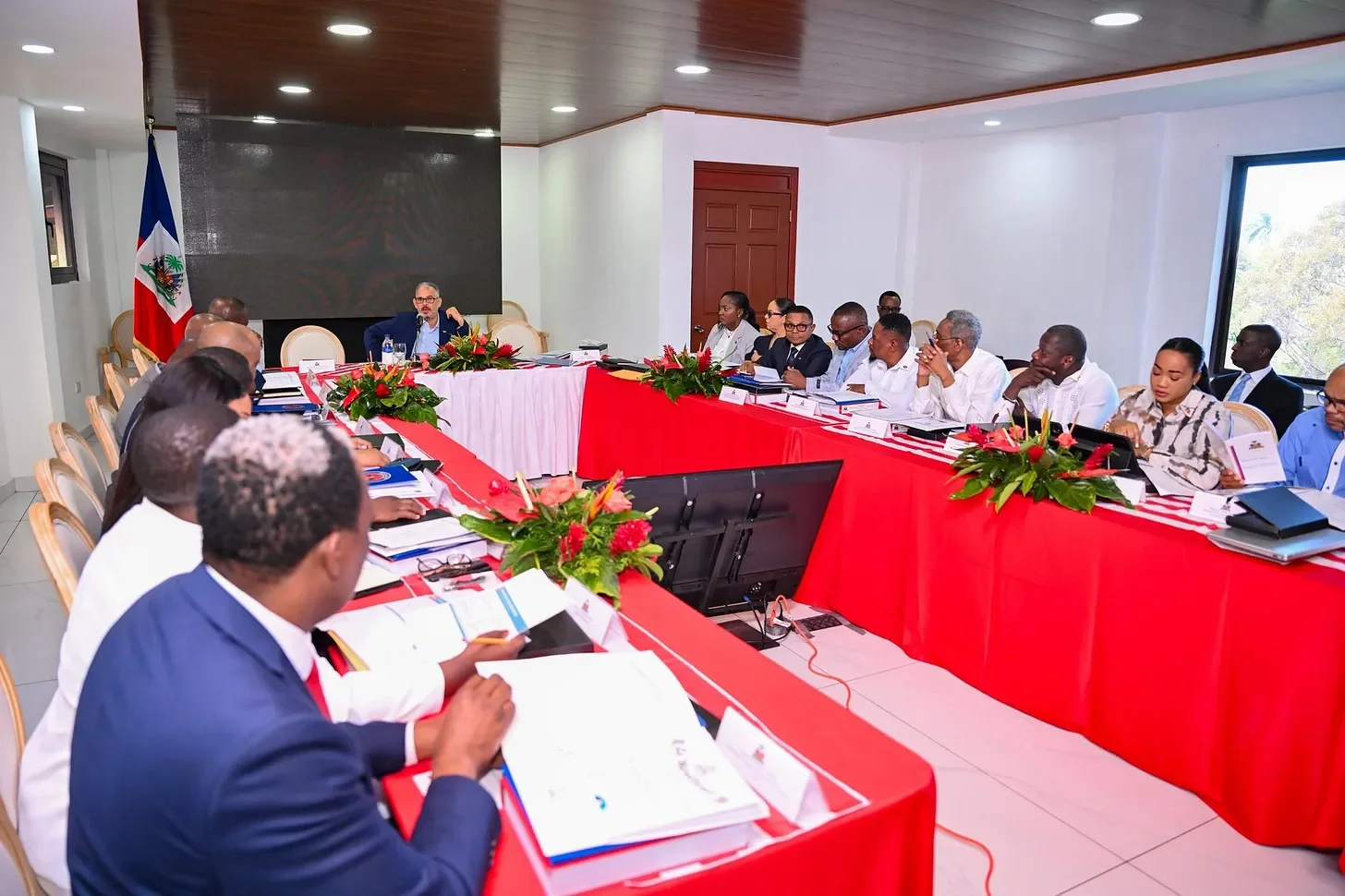
As I have written before, I do not expect much from the Fils-Aimé administration. The Prime Minister carried out what can only be described as a soft coup that few people anticipated. He now holds considerable, if not nearly all, power within the current political arrangement, and with that power came a rare opportunity. I have argued that if he were a nationalist, he could have used this moment to change the direction of Haitian politics and place his name in the country’s history books as a transformative leader.
He could have built a transition government composed of competent professionals focused on the two priorities he himself identified: restoring security and preparing credible elections. He clearly stated that the government should be composed of technocrats rather than political patronage networks. Instead, the agreement he signed with more than 200 political parties shows that he chose the opposite.
The government Mr. Fils-Aimé assembled, comprising 18 ministers, reflects his decision to take the path of patronage.
Haiti does not have 200 political movements competing over ideas or policy. What exists instead are structures created for economic capture that are operating under the cover of political parties. When a government draws its ministers from those networks, it does not signal reform. It signals continuity with the same system that has governed Haiti for decades. The recent report from Fondasyon Je Klere (FJKL), which documents a number of expansive and opaque contracts signed by the government with foreign firms, helps explain why the path of corruption was chosen.
Nevertheless, as citizens, we would only enable this government to act with even greater impunity by avoiding engagement with it. Our task is to find ways to hold it accountable and to preserve the dignity of Haitian citizenship.
I believe that our engagement should begin with two demands: transparency regarding the $1.50 levy collected on remittances and the right of Haitians andeyò to participate fully in the country’s elections whenever they are finally organized.
These are not technical policy debates. They concern our dignity and citizenship — indeed, our mounite.
Haiti Is Being Sold Off, and Haitians Are Doing the Selling
The recent report from Fondasyon Je Klere (FJKL) documents what the organization describes as the gradual liquidation of national sovereignty through opaque agreements with foreign companies. The report dispels the rumors by identifying specific contracts, dollar amounts, and the officials whose names appear in the public record. Those details matter because accountability cannot exist without evidence, and far too often, we operate on rumors (yo di!)
The FJKL report supports an argument I often make, which is that Haiti has the resources it needs.
The report demonstrates how Haitian leaders can find the money when corruption is involved. The political class has repeatedly shown its ability to sign contracts worth billions and authorize millions in payments under conditions of complete opacity. What Haiti lacks is not financial capacity but political integrity.
This reality is even more striking when considering that, amid worsening economic struggles and rising insecurity, the Prime Minister maintained ministries like Culture and Communication, Tourism, and Haitians Living Abroad, in a country largely inaccessible to tourists and a population long excluded from national affairs. Several other ministries could likely be kept on hold until stability returns. The government should have prioritized its resources on its two goals: security and elections.
Another issue deserves equal attention: the $1.50 levy placed on remittance transfers. Haitians abroad send billions of dollars home each year, and every transfer carries that tax. The revenue generated by this levy is significant, yet Haitians andeyò have never been given a credible accounting of how those funds are used.
This Is a Fight for Our Mounite
The fights for accountability over the $1.50 and for voting rights are often treated as separate issues. In reality, they both reflect the same fundamental question: whether Haitians andeyò will be recognized as full citizens or used as a source of revenue without a political voice.
This is not simply a technical debate about election procedures or financial reporting. It is a question about our mounite, our shared humanity, our dignity as Haitians, and the meaning of our citizenship.
When I use the term Haitians andeyò, I am referring to two groups that have long been marginalized in the country’s political life. Traditionally, the phrase described the millions of Haitians living in rural communities outside the urban centers where political decisions are made. Today, it also includes those of us living outside the country who remain deeply connected to Haiti but are often treated with indifference and even contempt.
Citizenship cannot exist in fragments. A nation must uphold both the responsibilities and the rights of its citizens for that citizenship to have meaning. Haitians andeyò are expected to contribute to the nation; they must also be able to participate in shaping its future.
The absence of that political voice becomes even more striking when we consider our current situation abroad. In the United States, Haitian nationals facing uncertainty amid changing immigration policies have often found more protection in American courts than in their own government. Judges in the American judicial system have sometimes been the institutions willing to enforce basic legal protections for Haitians, while the Haitian state remains largely silent about the fate of its citizens abroad.
Our citizenship cannot be negotiated. Haitians andeyò, whether in the communal sections of Haiti or living abroad, are citizens of this country and have the right to full participation.
Haitians Andeyò Must Organize, Not Only for the Next Election but for Survival
I understand that the Fils-Aimé government and the political parties surrounding it want to limit our ability to vote. That is why my final call is directed to the Haitian organizations that claim to speak on behalf of Haitians andeyò.
For decades, the Haitian political class has relied on our fragmentation, and we have been happy to oblige. As we remain divided and loosely organized, governments in the US and in Haiti can ignore our concerns without consequence.
Elections may happen or be delayed once again, but the need for organization remains urgent because the larger question goes beyond the next electoral cycle.
If we want our voices to matter, we must begin building the civic structures capable of sustaining that voice. This means organizing communities, educating citizens about their rights, and maintaining constant pressure for transparency and representation. It means building institutions that allow Haitians andeyò to act collectively rather than individually. Even if the current government cannot deliver credible elections, the work of organizing cannot wait for better leadership.
This call to action concerns the dignity of our citizenship and whether Haitians andeyò will continue to be treated as distant observers of their country’s future.