

Who Counts as Haitian?
Haitians Andeyò and Haiti’s Shrinking Circle of Belonging
As a Haitian-born U.S. citizen, I have long dreamed of contributing to the country of my birth. Over the years, through different civil society efforts, I have met countless Haitians who share that same desire. After the 2010 earthquake, many of us returned to Haiti believing that we could help with the rebuilding efforts. The devastation was overwhelming, but it also felt like a transformative moment, and we believed that from that tragedy a different future might emerge. Sixteen years later, of the dozens of friends and colleagues who had returned, only one or two remain in Haiti. I am one of those who was pushed out by the same political dysfunction and insecurity that continue to define our national life and forced far too many children of Haiti to migrate to distant lands all over the globe. Without Haiti, I feel unmoored, and yet more often, I don’t recognize my country or my fellow Haitians.
It is difficult to ignore the pattern in our history. We can blame the "blan," but time and again, it is Haiti's children — its leaders, whether elected or imposed — who have governed through strategies of division and exclusion. They know the right things to say and the right policies to announce. But when they have the opportunity to govern, they do so through the systematic exclusion of those in the rural areas and outside the country. That is the history I carry with me as I watch Haitians abroad get excited about the possibility that we may finally be "allowed" to vote in Haiti's next elections.
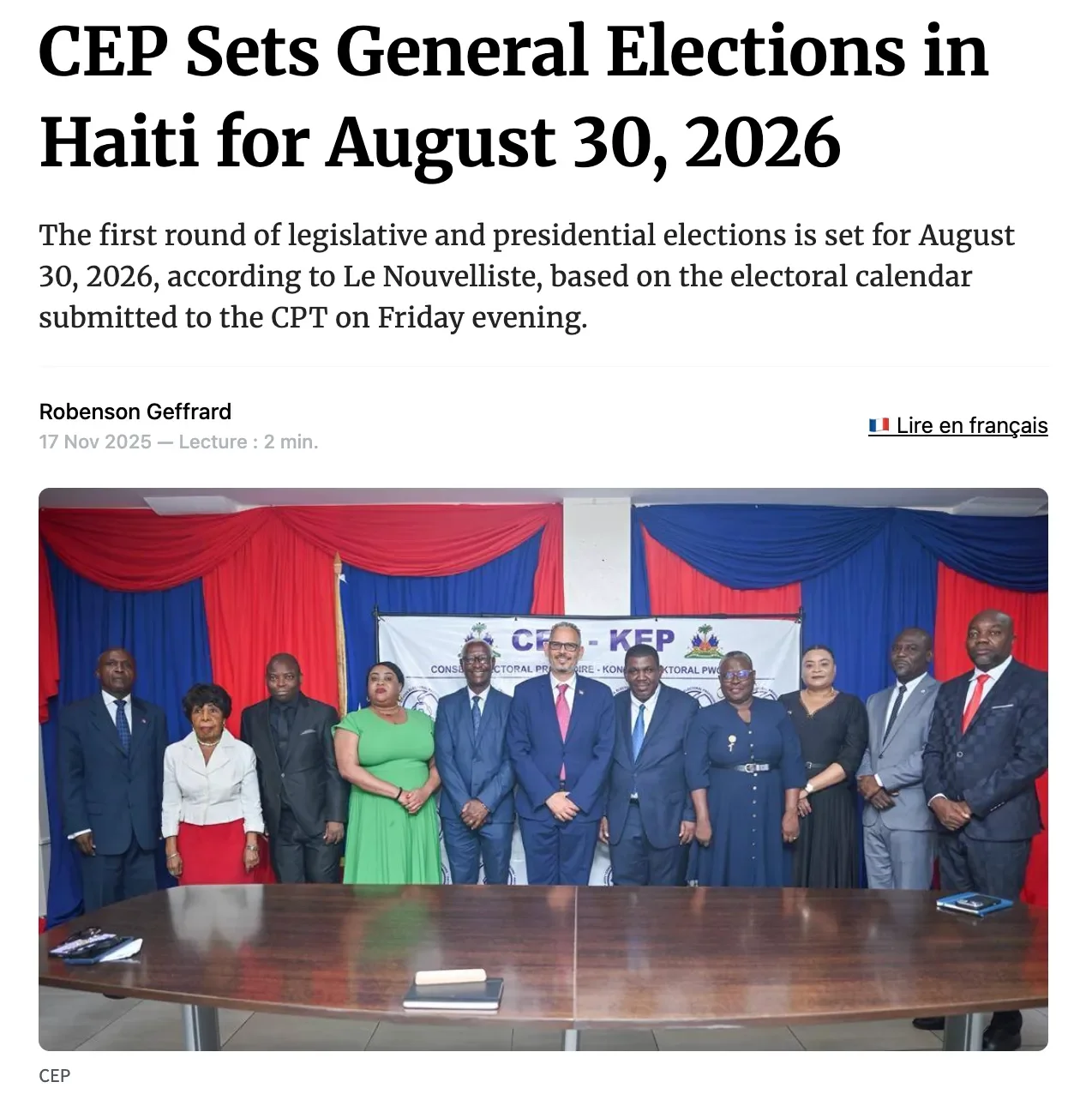
Haiti’s de facto government, led by Prime Minister Alix Didier Fils-Aimé, committed to two core priorities in the National Pact for Stability and the Organization of Elections: security and elections. The Provisional Electoral Council (CEP) has set the first round for August 30, 2026, with a potential second round in December. In the proposed electoral decree, the authorities state that Haitians living abroad will be able to vote. As recently as a few days ago, the Minister of Haitians Abroad posted on Facebook that “for the first time, Haitians living abroad will have the right to vote in the next elections,” declaring that wherever we are in the world, Haiti needs us and our voices matter.
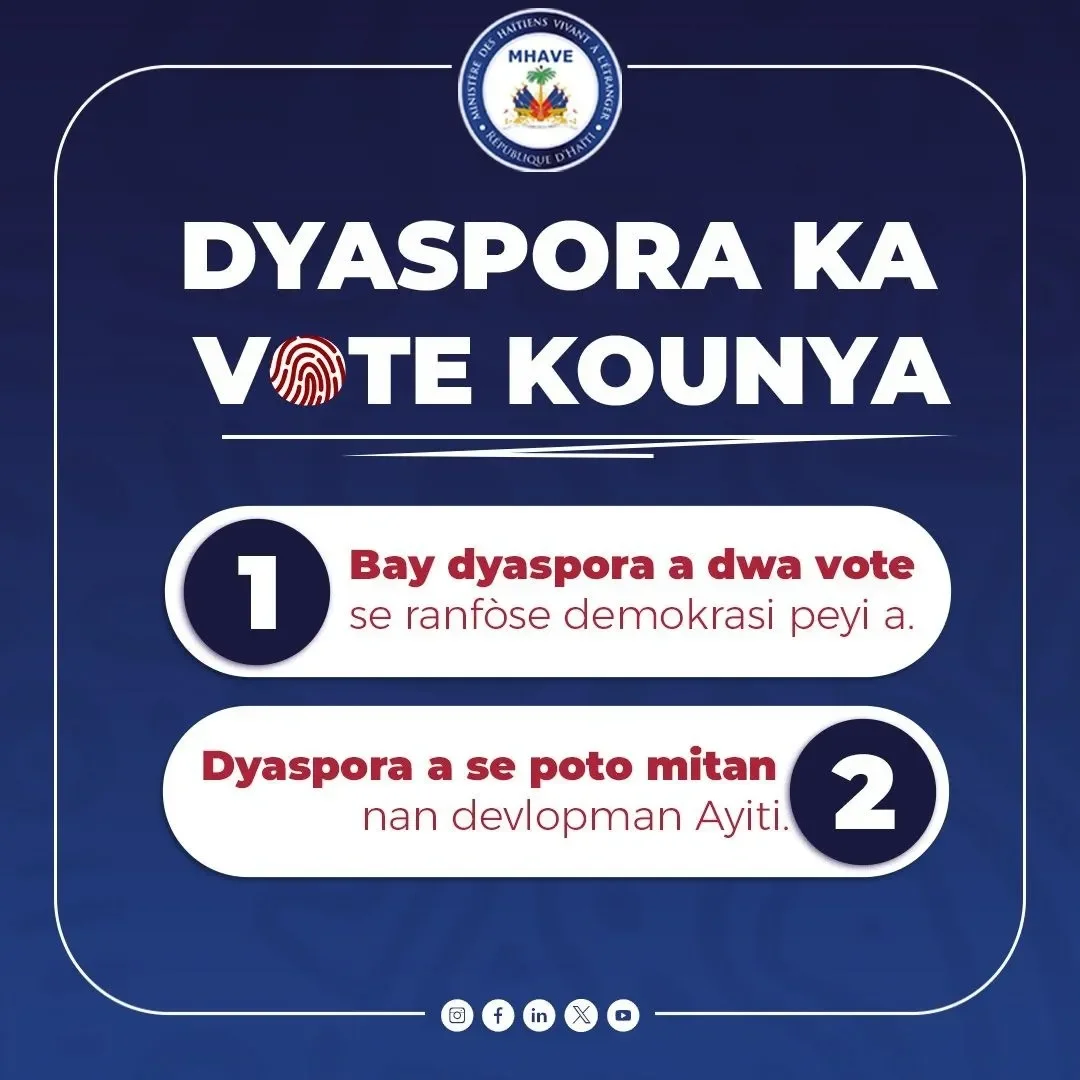
For Haitians Andeyò, the announcement stirred hope. However, as I wrote last November, that promise deserved deep skepticism. Today, that skepticism is turning into anger because the CEP has done nothing to advance the goal of integrating Haitians Andeyò into the process.
What we are witnessing is another sleight of hand: the language of inclusion paired with procedures designed to make participation nearly impossible.
The Promise of Voting Rights for Haitians Abroad
Article 407 states that Haitians outside the country who meet the qualifications of an elector may vote in the presidential election within communities of Haitians abroad identified by the electoral council. Article 408 adds that the electoral council will determine the procedures through future regulations. We are now in March 2026, and those procedures have yet to be published.
Articles 54 and 55 establish that voter registration points will be located across the national territory and organized by the Office National d’Identification. In other words, the law organizes voter registration within Haiti itself and offers no option for overseas registration. There was an obvious opportunity to create extraterritorial registration points at Haitian embassies and consulates abroad. The CEP chose not to include such language in the decree, and I don’t believe it was an oversight.
Article 56 goes further. It requires citizens to appear in person at their preferred voting station with a valid national identification card. In other words, you must first obtain an identity card and then travel in person to a registration point to enroll as a voter. This places Haitians living far from these facilities in an impossible position. In the United States, for example, Haitians living in Indiana, whose population grew eightfold between 2019 and 2023 to an estimated 12,465 — with community leaders placing the real number closer to 30,000, would have to travel to Chicago simply to reach the nearest Haitian consulate. Many Haitians around the world face an even starker reality, living in countries where Haiti has no embassy or consulate at all.
The Timeline Makes the Problem Clear
March 2026: We are here. The CEP has not yet published any procedures for registering Haitians abroad.
Article 408 regulations: Still unpublished. The CEP has promised to send a mission to consult with Haitian communities abroad, which means that as of today, no voting mechanism has been designed, let alone announced.
June 2026: Deadline. Article 58 requires the electoral list to be finalized sixty days before the vote, after which no registrations or modifications are permitted.
August 30, 2026: Election day.
Even if we give the CEP and the de facto government the benefit of the doubt and assume good faith, it is nearly impossible to see how the administrative infrastructure needed to register millions of Haitians abroad could be designed, announced, and made operational between today, March 14, 2026, and June 30, 2026, the deadline imposed by law.
Who Gets Left Behind
The scale of who this excludes is not abstract. According to the 2024 Current Population Survey analyzed by the Center for Immigration Studies, there are approximately 852,000 Haitian-born individuals in the United States, with the total population of Haitian descent estimated at over two million. More than 211,000 Haitians entered the United States through the CHNV humanitarian parole program and now face deportation proceedings with no political voice. Adding those holding Temporary Protected Status, that number rises to roughly 350,000.
Large communities also live in the Dominican Republic, Chile, and Brazil. Across these communities, the number of Haitians living outside the country easily exceeds one million. Under the current registration framework, nearly all of them would be excluded.
Exclusion by Design, Not by Accident
This gap is not a technical oversight. As I argued in 2023 when calling for Haitians abroad to elect their own representatives, Haiti’s political class has long treated Haitians Andeyò as a source of remittances and as cultural ambassadors in the arts and in sports for Haiti.
Still, this is not just on them. When Haitian officials come to our communities, we welcome them with great fanfare and treat even the most compromised among them with unearned respect. Despite the absence of security and the rule of law at home, we eagerly discuss investment with them, and they oblige us by convening tourism and investment panels, such as the National Assemblies on Security and Investment that MHAVE will be organizing in Cap-Haïtien and Les Cayes next month.
We are invited to discuss, to invest, and to contribute. We are not invited to vote. As the saying goes, sòt ki bay, enbesil ki pa pran — the fool who gives and the imbecile who doesn't take.
We bear responsibility for our role in allowing this arrangement to continue, and for the abuse and disregard it produces. They treat us with disdain, and we smile and ask for more.
Haitian society has long found ways to narrow who counts as a genuine participant in national life. Skin color, hair texture, language, and class have all served this function at different moments. It began with the moun andeyò of the rural interior, too distant and too poor to matter to those in power. Over time, that circle of exclusion expanded to include those of us living outside the country.
We are all moun andeyò now, and we must demand our full participation in our country’s governance.
The right to vote cannot exist only in speeches and Facebook posts. Frankly, I do not believe elections will take place within the current timeframe, and if they do, the simultaneous push for constitutional amendments risks turning the entire process into a mess of competing agendas. Regardless of when elections are ultimately held, the demands remain the same. The CEP and the Fils-Aimé government must immediately authorize extraterritorial registration, extend the timeline, and publish the regulations that Articles 407 and 408 promise but have not provided.
Without those steps, this decree will provide the appearance of inclusion while guaranteeing our exclusion.
Haiti says it needs us. It is time to prove it.