

A quick note before you read: I have received a great deal of thoughtful and encouraging feedback on these articles, much of it privately, and I deeply appreciate each one. I have one favor to ask. If these ideas resonate with you, please repost and share thes articles. These conversations become more meaningful when they reach beyond those of us already having them.
In the first part of this two-part article, I explored how President Trump and his administration tested the limits of presidential power and the law, sometimes even crossing them while facing few consequences than many expected. This approach to governance should not be a model to emulate. However, it exposed something many of us understand implicitly, namely that an organized movement with a president willing to use the power of the office can change the country’s direction.
Too many progressive leaders, by contrast, seem afflicted by what I call the syndrome of low expectations.
Nations can also suffer from this syndrome, though they did not always. The pan-African independence movements of the 1950s and 1960s, beginning with Kwame Nkrumah’s Ghana in 1957, treated sovereignty as something to be seized rather than requested, and insisted that a nation’s freedom meant nothing until it was actually exercised. The syndrome shows up today when leaders begin to view their country’s weakness as permanent, approach economic and security challenges from a position of dependency, and accept decisions made in foreign capitals as mandates. Those countries remain independent on paper, yet sovereignty is meaningless to a government unwilling to exercise it.
We are seeing a resurgence of countries challenging the assumptions that sustain these power imbalances.
Senegal and Burkina Faso ended the permanent presence of French military forces on their soil. Barbados removed the British monarch as its head of state and became a republic, closing a colonial tie that had outlasted independence by more than fifty years. Their circumstances differ by continent, decade, and method, yet they point to the same question. How much of what nations accept as inevitable remains so only because they stopped imagining they could choose differently?
For Haiti, that question is unavoidable. Haitian leaders have come to see the country through the international community’s prism. Foreign interference is real and must be confronted, but so must the vacuum we have created, which allows it to overrun our public discourse. It is the Haitian economic and political leaders who have weakened our institutions and ceded large swaths of territory to armed groups.
Our economic class often behaves as though it exists outside the Haitian social body, while our political class has repeatedly sold us out.
The electoral council approved 316 political parties to compete for power. Yet neither the parties nor the declared candidates have so far offered a coherent vision of national cohesion and territorial integrity, nor have they taken up the fight for the sovereignty of the nation they seek to lead. To be fair, the failure is not theirs alone. Haitian civil society has yet to organize around a real ideology either, one that demands different politics and different politicians.
Understanding this gap has also forced me to examine my assumptions. I have spent countless hours researching how other colonized people have organized against domination, without pausing to ask what we have and can build on from our cultural inheritance as Afro-descendants.
Sovereignty Also Requires Looking Within
Like many Haitians, I grew up in a Christian household. Although I cannot recall ever being explicitly told that Vodou was evil, I understood the message. I internalized society’s broader view of Vodou as something to be ashamed of and therefore never considered it worthy of serious study.
I now understand what Frantz Fanon meant when he wrote about colonized people seeing themselves through the colonizer’s eyes and under the colonizer’s judgment. As I undertake this journey of discovery, I am less interested in whether Vodou offers a political program than in what traditions such as the lakou, mutual obligation, collective responsibility, and communal survival might teach us about organizing Haitians today. These are humanistic traditions, not unique to Africa. We find versions of them in the potlatch ceremonies that Native nations of the Pacific Northwest built their communities around, and in the ayni and minga of Andean communities, where labor and care circulate as sacred obligation rather than something bought and sold.
Across these traditions, we also see their systematic destruction, cleared away to make room for a parasitic, extractive culture of consumerism that replaces obligation to one another with dependence on the market.
A serious project of Haitian sovereignty must also consider who has standing to shape the country’s future. Haitians andeyò, both abroad and in the historically excluded countryside, have an essential role to play. Our belonging and our right to help define Haiti’s future do not depend on proving our worthiness or usefulness to anyone. Those who tell me I don’t understand Haiti because I live in New York will turn around and exclude Haitians in the country’s rural communal sections as well. I reject this fragmentation because it serves those who benefit from our division.
We Must Plant Trees Under Which We May Never Sit
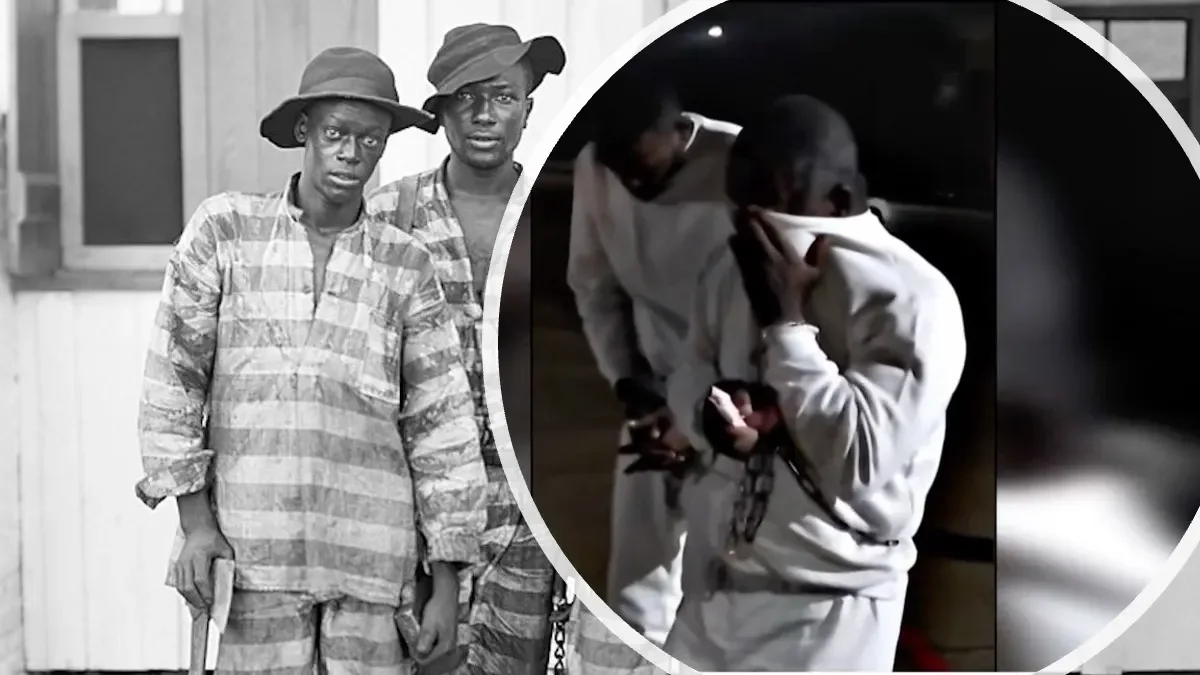
Our ancestors maintained their agency despite the chains and fought for their freedom under far more brutal conditions. I raise this not to compare suffering, but because they acted without knowing whether they would live to see what they built. We should also avoid romanticizing that history, since the generations that came directly after independence reproduced the inequalities that still haunt Haiti. Still, the revolutionary generation proved that even people who appear powerless can alter history once they organize to exercise their agency.
The lesson is that building a different Haiti requires the same long-term view. We must create institutions that endure beyond any election cycle or any leader, regardless of charisma. We must build intentionally so that those who come after us inherit more freedom and power than we did.
Agency Requires Organizations
We have too often waited for a single leader to save Haiti because we have learned to associate most movements with the one person history remembers.
Perhaps our problem is not the absence of leaders but our failure to create the structures in which different kinds of leaders can succeed. W
e have also learned to associate most major movements with one or two well-known names. We all know MLK, Rosa Parks, and Mandela. Fewer know Bayard Rustin, a gay black strategist who worked outside the spotlight and organized the 1963 March on Washington; Claudette Colvin, who, at fifteen, refused to give up her seat on a segregated bus nine months before Rosa Parks; or Walter Sisulu, a strategist, a builder of movements and institutions, and a mentor to Mandela.
The leaders Haiti needs may already be among us. Some inspire other activists, while others educate, strategize, and build institutions. We should stop searching for the one person who embodies every quality of leadership and instead focus on creating the conditions in which current leaders can contribute what they have.
Frederick Douglas warned in 1857 that power concedes nothing without a demand. My experience so far adds another lesson. Power concedes nothing to the unorganized.
I am learning and working with others to organize and build something rooted in Haitian dignity, responsibility, and collective power. This work requires us to start with education to build consciousness; engagement builds relationships, and organization gives those relationships structure. Finally, our mobilization can become power. Although success is never guaranteed, urgency is no excuse to skip these steps. Indeed, I want to argue that it makes these steps even more necessary.
We may never see the fruits of this labor or sit beneath the trees we plant. Our responsibility is to plant them anyway.