

We are often warned not to make decisions when we are angry. That advice has wisdom, especially in politics, where anger can make us reactive and easier to manipulate. We sometimes take the lesson too far, however, treating anger itself as a failure of judgment and calmness as evidence of wisdom.
Anger is not always wrong. If you are being abused, humiliated, or treated unjustly, you should be effing angry.
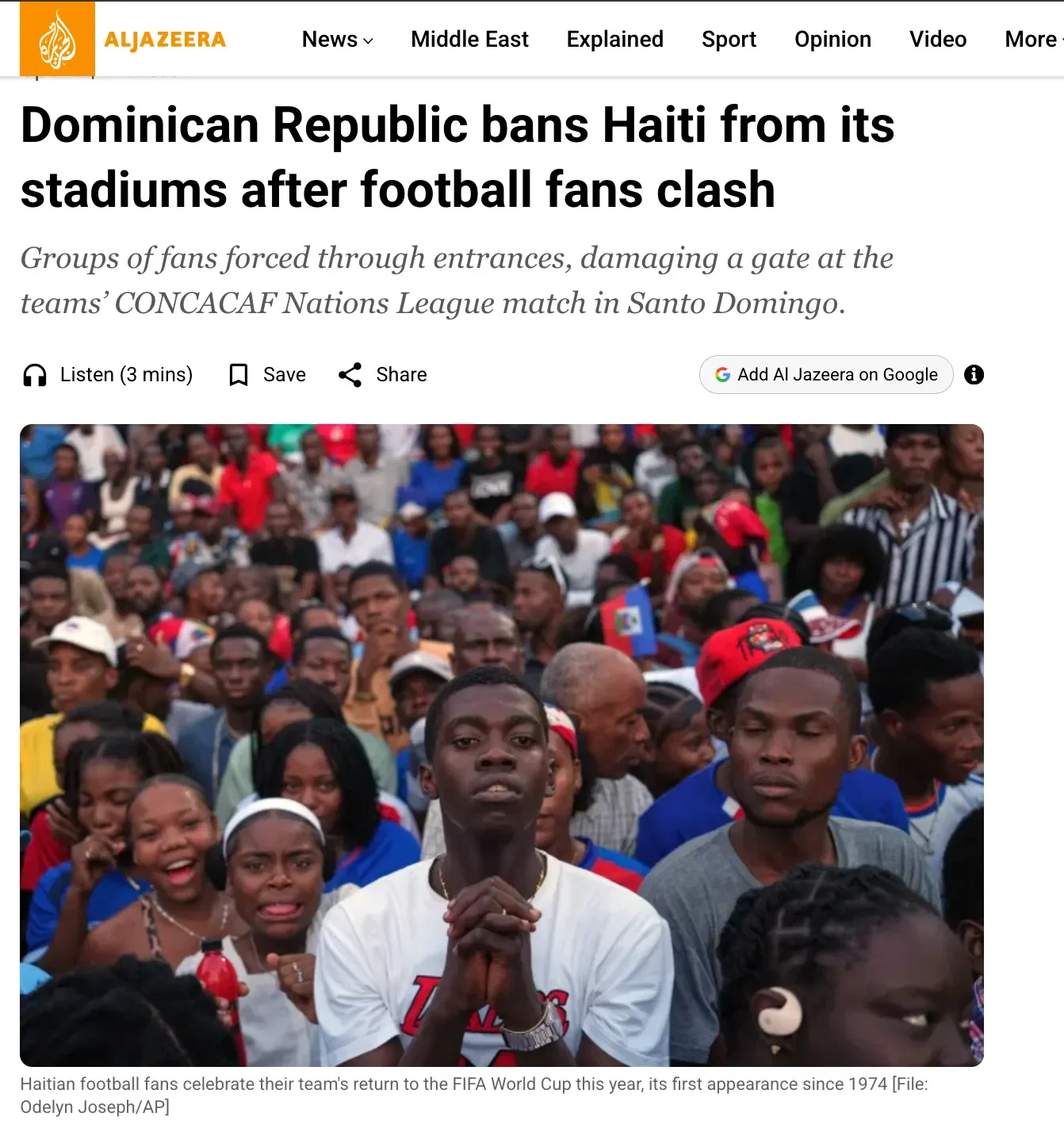
For the past few days, social media has been on fire after Haiti’s national team, the Grenadiers, defeated the Dominican Republic 4–1 in Santo Domingo. In the heat of the moment, one player, Wilson Isidor, declared that Hispaniola is Haiti. I understand the pride behind his words. He had just helped secure a victory that made Haitians everywhere stand a little taller. His words have since been used by Dominican politicians and online influencers to fan the flames of anti-Haitian sentiment. Now the Dominican government says it will no longer allow Haitian teams to play in its stadiums.
To be sure, anti-Haitian sentiment in the Dominican Republic did not begin with Isidor's statement, and we should never be blamed for the xenophobia directed against us. Hundreds of thousands of Haitians live in fear of raids, deportations, and discrimination, within an entire ecosystem that profits from their vulnerability. They are extorted at the border, at checkpoints, and on buses as they travel to church, school, or the supermarket. If detained by immigration authorities, many face extortion again through what I call a system of "catch and release." At work, some employers decide what to pay Haitian workers, or whether to pay them at all. For too many Haitians in the Dominican Republic, daily life is shaped by exploitation and constant fear.
If you are speaking from outside the DR, as I am, remember that we may not bear the consequences when tensions rise. The Haitian worker, vendor, and child living there will.
The uncomfortable truth is that our Grenadiers have no home, and that is where I want us to direct our anger. Haiti has not hosted an international match since 2021. Our main stadium, “Stade Sylvio Cator,” sits minutes from the National Palace, yet our government cannot secure it for our national team, just as it has left millions of Haitians homeless.
So imagine what would happen if our answer were a national commitment to bring the Grenadiers home. Imagine if Haitians andeyò, those shut out of power in the provinces and those of us abroad, organized around that goal while demanding that our government secure the country. We should not have to do the state’s work, but no one is coming to bring our team home. A stadium would be only a symbol, yet sometimes a people need to prove to themselves that they can still build something together.
Our dignity does not depend on how others treat us.
It is measured by what we demand of ourselves and by what we build together. The day the Grenadiers play in Haiti before a home crowd will mean more than any victory abroad.
I am angry, and if you are too, I want you to know that your anger is justified. Anger alone, however, will not change Haiti. Reason must guide what we do with it, collective responsibility must shape our response, and together we can turn our anger into collective power.