

When the State Is the Only Market
Haiti’s 320 political parties are not a democratic problem. They are an economic one.
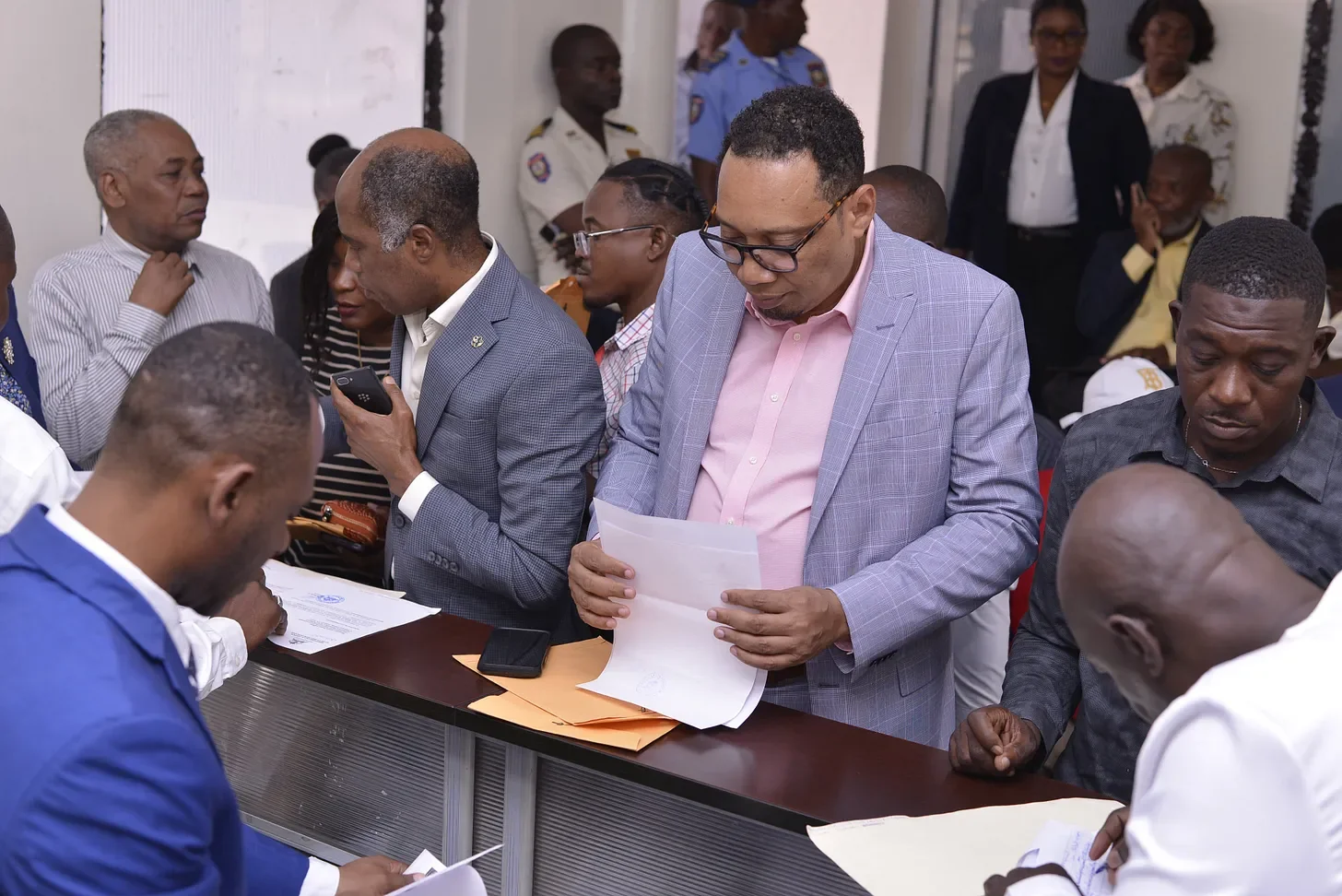
Three hundred and twenty political parties and coalitions registered to participate in Haiti’s elections scheduled for August 30th. Sit with that number for a moment. Not three, not thirty-two, but three hundred and twenty distinct entities claiming to represent a coherent political vision for a country where armed groups control an estimated 85 to 90 percent of the capital, where public services barely function, and where political actors are unable to sit at the same table without the pressure of or convening of foreign actors. This is not democratic vitality. It is something else entirely. And if we misdiagnose it, we will keep prescribing the wrong solutions.
Politics as the Last and Only Economic Ladder
Before the Law of August 16, 2013, Haiti had roughly 40 to 60 recognized political parties — that was bad enough. The 2013 decree was introduced as a reform to standardize and simplify registration. However, it resulted in an administrative opening with almost no enforcement threshold. By 2015, the number had exceeded 100. Today, it stands at 320. The reform did not strengthen institutions. Instead, it lowered the barriers to entry into a space where the real reward was never ideology or service but proximity to state resources, and in doing so, it drowned serious political organization in noise.
We cannot understand this growth by looking at politics alone. We need to examine the economy.
Haiti does not have 320 coherent movements competing over ideas. Instead, it has a system where access to the state has become one of the few dependable ways to secure resources, influence, and mobility. When the formal economy remains concentrated in the hands of a small oligarchic class and youth unemployment nears 37 percent, making an entire generation structurally invisible, forming a political party is not primarily a civic act. It is a rational economic decision. Political parties serve as vehicles for negotiating positions, securing state contracts, and building patronage networks.
When the public sector fails to create the right environment and the private sector cannot absorb the ambitions of a growing population, that ambition shifts to the government. In this context, the proliferation of parties is not irrational. It is predictable.
This logic also explains something I instinctively resist: the efforts to exclude us — Haitians andeyò. I am a fierce advocate for our inclusion, and I yield no ground on our Haitianness. However, as an analyst, I must acknowledge what motivates the opposing argument. It is not a constitutional principle or a genuine love for democracy. It is a desperate attempt by players in a saturated market to protect themselves from new competitors. The same logic used in business, which has resulted in an economic class of voracious scavengers.
I recently saw a video of Mètrès Thòya, a young female activist and leader of the Mouvman Agrikilti-Rebwazman Lelvay. In it, she argued that anyone running for political office in Haiti must have their family living in the country, reasoning that if the children of Haitian leaders attend Haitian schools and receive care in Haitian hospitals, they would be compelled to fix those institutions. The argument has emotional power, but it is a solution in search of a problem. As most debates in Haiti are, it is emotional rather than rational. For 222 years, Haiti’s leaders, with rare exceptions, have contributed to the country’s destruction, and they all lived in Haiti with their families. When tested logically, that argument doesn’t make sense, but in some ways, it does — and the argument against Haitians abroad reminds me of Jesus’ Parable of the Prodigal Son.
In the parable, a father welcomes back his wayward son and orders a fatted calf slaughtered in celebration, while the older son, who had remained through every hardship, burns with anger. That anger is not irrational, and our compatriots who stayed through the instability and danger are not wrong to feel something when those who left return to compete for spaces the system has always treated as scarce. Although that resentment is circular, as those in urban areas direct it against those from rural areas, it nonetheless deserves honest acknowledgment. The problem is rooted in scarcity, not in any coherent theory of governance, and scarcity is exactly what organized civic development should aim to address.
The Gatekeepers Discriminate Indiscriminately
This March, as we observe Women’s History Month, it’s important to recognize both the contributions of women and the challenges they face. The exclusion of Haitians living outside the country, the marginalization of moun andeyò in rural areas, and the sidelining of women from social, political, and economic power are interconnected issues. They all stem from a basic instinct to secure access in a scarcity-driven environment. For women, there is the added issue of patriarchy. The recent attacks against the female ministers in Haiti’s de facto government go far beyond legitimate criticisms — they become more revealing, personal, dehumanizing, and aimed at undermining their legitimacy as Haitians more than the criticisms against their male counterparts.
What seems like upholding standards or following laws is ultimately a turf-protecting act by individuals who understand that broadening the circle of legitimate leadership threatens the existing arrangements they rely on.
Scarcity Is the Real Sickness
Three hundred and twenty parties are definitely a problem, but they are not at the heart of Haiti’s issues. They are a sign of a nation that, over more than two centuries, has failed to build an economy where ambition can flourish outside the government. We cannot regulate our way out of a problem rooted in economic scarcity, nor can we shame people into changing behaviors that the system itself encourages.
The answer is not simply a better electoral law, though enforcement and rule of law matter. It is the sustained work of building civic institutions that hold leaders accountable and develop leadership beyond oligarchic networks. No one will do this for us. The resources, the historical memory, and the urgency already exist among Haitians at home and abroad.
I must also admit, with deep sadness, that we Haitians andeyò are not immune to the divisions we criticize, and we cannot blame Governor Wooster — the name Haitians have given the U.S. Chargé d’Affaires — for the crisis in the communities of Haitians living abroad. We're unable to come together to articulate a cohesive vision or plan to address the fundamental crisis of insecurity. Until ambition has a real place to grow outside the state, politics will remain Haiti’s most overcrowded and most bitter industry. The parties will keep multiplying until there is something more meaningful to build.