

Why Haiti’s Majority “Moun Andeyò” Needs a Movement
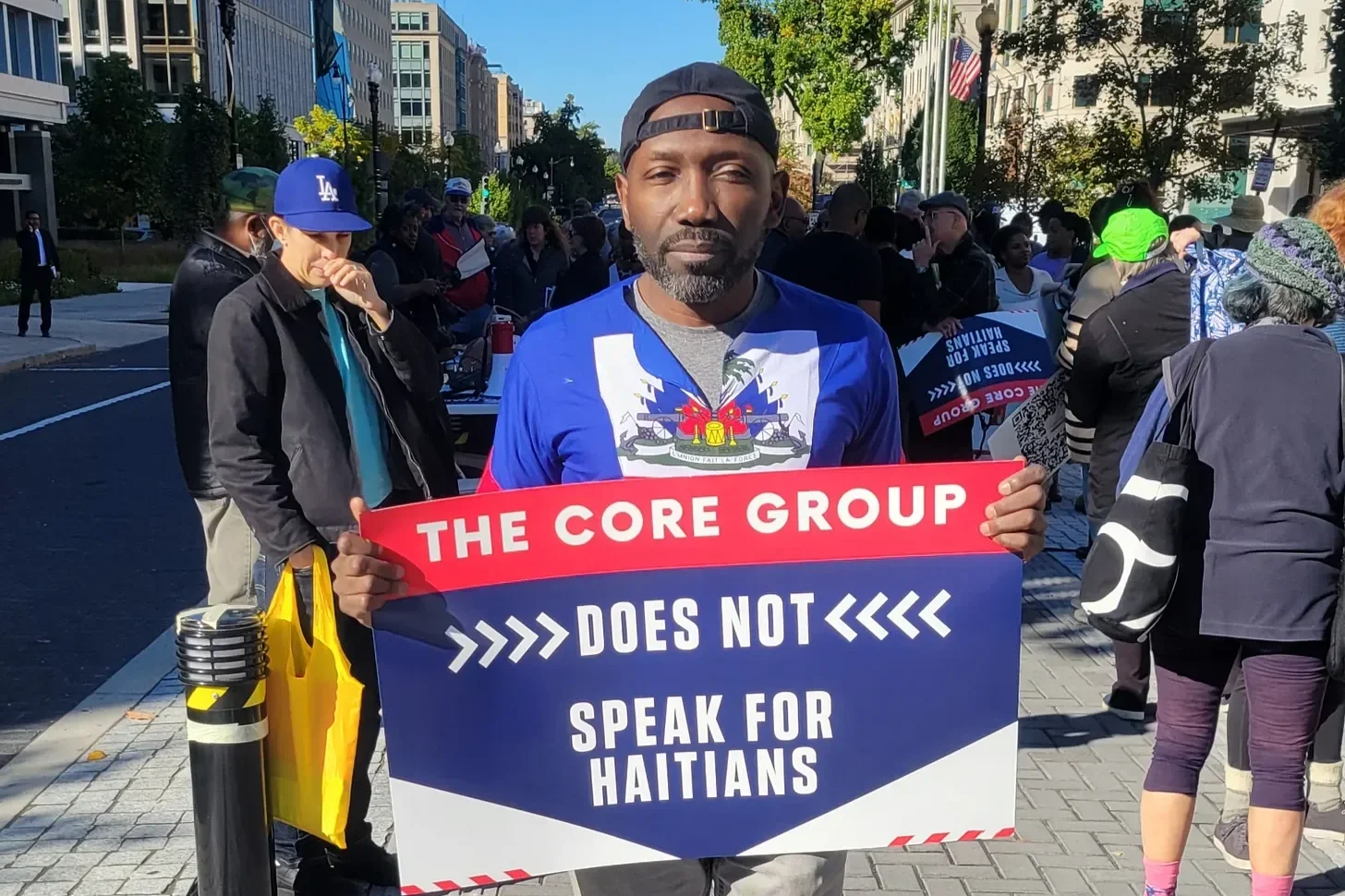
Part I – The Roots of Exclusion and the Need for a New Political Force
This essay is the first installment of a two-part op-ed on why Haiti’s majority, the moun andeyò, must build a political force capable of reshaping the country’s future. Part I examines the roots of exclusion, the failure of our current political structures, the limits of asking those in power for change, and the urgent need for a movement that evolves into a disciplined political party. Part II will outline the national compact required to rebuild Haiti and present the early steps of an emerging “campaign for dignity” designed to give the moun andeyò a political home for the first time in our history.
When Haiti’s national soccer team qualified for the 2026 World Cup, something happened that the country had not experienced in years. Haitians worldwide shared the same surge of pride. For a brief moment, we recognized ourselves again.
Yet those in charge, including the Transitional Presidential Council (CPT) have remained indifferent. Their silence exposed a deeper disconnect. The gap has grown so wide that they no longer share in the people’s moments of joy, nor do they stand with them in moments of sorrow. While most Haitians struggle for dignity and physical safety, those in power move within a protected bubble. That simple contrast revealed a profound truth about the political order in which Haiti has been trapped.
The System of Exclusion That Shapes Our National Life
Haiti is structured, built, and governed through exclusion. For years, I have written about how that exclusion shapes our political reality. It affects Haitians living abroad, who are welcomed when they send money but dismissed when they seek a voice. It also affects the millions living in the rural “peyi an deyò,” the communities Gérard Barthélemy described as the invisible majority that sustain the country through agriculture and a resilience stretched to its limits.
Those of us outside of Haiti and in the rural areas are the same moun andeyò. We are outsiders in our own nation, which uses us but ignores our citizenship and even our humanity. We represent Haiti’s largest demographic, yet we remain absent from the institutions that govern.
This exclusion is deliberate and layered. It is geographic, keeping rural communities in the periphery. It is structural, concentrating authority in Port-au-Prince among narrow circles – menm penpenp yo. It is cultural, conditioning us to believe that only certain voices matter. And it is intentional, designed to preserve a system where a weak state enriches those who profit from chaos.
Dessalines’ haunting question, “And the poor blacks whose fathers are in Africa, will they therefore have nothing?” still hangs over the nation because the injustice he named was never confronted. Yet exclusion survives not only because elites enforce it. It endures because too many of moun andeyò have stepped back, convinced that politics is dirty and pointless. In our retreat from civic life, we left the field open to those who rely on our absence. In that space, corruption thrives, violence spreads, and mediocrity becomes the norm.
The result is a political order in which millions of us are relegated to the margins of our own country.
The Limits of Asking a Government That Refuses to Hear
In “Anticipating and Seizing the Moment: 6 Key Demands for Haitian Diaspora Inclusion,” I outlined a few basic steps that could have made genuine participation possible for the moun Andeyò. These were not radical proposals. They were the minimum requirements for a country that claimed it wanted a new beginning.
Instead, the Provisional Electoral Council (CEP) repeated one of the oldest patterns in Haitian politics. It issued an electoral decree that mentioned voting rights for Haitians abroad while depriving that promise of any real content. It offered inclusion with one hand and took it away with the other.
We have been ignored, not because our demands were unclear, but because unorganized citizens do not influence a political system that was designed to deny them a voice.
The lesson is clear: those of us living in the periphery – the moun andeyò – will continue to be dismissed, abused, and ignored until we build organized power that cannot be ignored.
From Asking to Building Our Own Power
Still, Haiti cannot grow or move forward if the majority of its citizens continues to be excluded. Our problem is not only the absence of competent leadership, but the absence of strong civic institutions capable of holding leaders accountable.
Accountability requires structure, structure requires organization, and organization requires people coming together with purpose.
If we are to break from these patterns of exclusion, a movement must rise from the majority that has carried the nation without ever being given a political home. This movement must begin with the moun andeyò across the rural interior and in communities abroad. It must grow into a force capable of influencing national decisions, challenging entrenched interests, and ultimately governing with seriousness, competency, and discipline.
But a movement alone is not enough. It must eventually evolve into a political party that does not reproduce the failures of the past.
Why a Party by and for the Moun Andeyò Is Necessary
Many Haitians distrust political parties, and with good reason. Most parties in Haiti can barely be considered organizations. More often, they are personal networks that emerge during elections and disappear immediately after. They don’t have any governance, and they rarely do the work to develop leaders, programs, or propose policies. They have no platform and certainly no interest in educating the voters.
A real party is different. It is an institution anchored in values and discipline that trains leaders, cultivates civic responsibility, and develops coherent programs and policies across election cycles. It gives citizens a structure through which to participate in national life.
I believe that we need such a structure to convert our numerical strength into political power.
The Self-Defeating Pattern That Destroys Leaders and Movements Alike
The need for a party rooted in the moun andeyò is not only moral. It is strategic. Haitian leaders who believe they can operate without a strong, organized base eventually discover that they are vulnerable. The recent accusations by the United States against CPT member Fritz Alphonse Jean make this painfully clear.
Whether one agrees with Washington’s decision or questions its motives, what undergirds their arrogance is that Fritz Jean, like all the members, is that they have no popular support.
Fritz Jean is alone because he distanced himself from the constituencies that once formed his base. He overestimated his ability to navigate Haitian politics and the international community through personal relationships, and now he faces pressure without any organized movement to defend him.
What happened to Fritz Jean is not unique. It is part of a long pattern in Haitian political life: leaders rising on the energy of collective movements and then abandoning the very people who elevated them. And as part of the Montana Accord, Fritz Jean both inherited and reproduced this pattern.
The Montana Accord began with extraordinary civic energy. In January 2021, a Fowòm sitwayèn/en created the Kominite Swivi, the first attempt at a coordinated citizen engagement. By August 30, 2021, this work produced the Montana Accord, a Haitian-led effort to confront the national crisis. Soon after, the Biwo Swivi Akò (BSA) was formed with twenty-one members representing popular sectors, political actors, and civil society. Then, on December 12, 2021, the Konsèy Nasyonal Tranzisyon (KNT) was established with delegates from across every major sector of Haitian society. The KNT’s mandate was clear: elect a transitional president and prime minister, validate a government, and approve the transition roadmap. The diaspora was present at every level: one representative in the BSA and three in the KNT. The plan even created an Ògann Kontwòl Tranzisyon (OKT) to ensure oversight, but the OKT was never formed, and that failure proved critical.
The collapse of the Montana Accord was a disappointment, but it was predictable. It followed a consistent pattern that revealed the movement’s structural weakness. Fritz Jean ignored the BSA, the BSA ignored the KNT, and the KNT, including its diaspora representatives, ignored the very members and organizations that supported them.
Authority and power flowed upward into a smaller and smaller circle, detached from the base that had created the movement in the first place. Without accountability to any formal organization, decisions were made in isolation. Without mechanisms to resolve disputes, conflicts multiplied. And without a structure to anchor the movement, the entire effort collapsed like a castle built on sand.
This is more than a story of individual failures. It reveals a fundamental weakness in Haitian political culture. Movements that refuse to formalize themselves eventually disintegrate. Leaders who abandon their base become defenseless. And coalitions that depend solely on goodwill and personal charisma cannot survive pressure from internal divisions or external actors.
I am often at odds with my comrades on this, but I believe that Haiti cannot claim sovereignty when we do not create and sustain strong institutions that are capable of defending the nation.
When a mere chargé d’affaires interferes in Haiti’s internal affairs, there is no organized movement to challenge him.
There is no credible body to speak with legitimacy and authority. There is no political force capable of insisting that Haiti must define its political destiny.
A party rooted in the majority, the moun Andeyò, would change this dynamic. It would give local politicians a dependable base, a clear source of legitimacy, and a shield against arbitrary pressure from abroad or from rival factions. It would give ordinary citizens a structure through which to act together. And it would create the kind of disciplined civic power that external actors cannot bypass.
When political actors know they can stand with a strong organization, and when citizens know they can stand with one another, the balance of power finally begins to shift. A party undergirded by good governance and rooted in the power of the moun andeyò would end the cycle in which leaders abandon their base, movements collapse without structure, and millions remain locked outside a system they sustain with their labor and their hope. But a party cannot be willed into existence through speeches alone. It must be built with intention, competence, discipline, and a clear sense of what it stands for.
Part II of this essay will outline the national compact required to rebuild Haiti, organized around security, prosperity, and education. It will present the early steps of a campaign designed to give the moun andeyò a political home for the first time in our history.