

Rethinking Aid: Can Haiti Stand on Its Own?
The ongoing debate about foreign aid often lacks critical nuance. While many associate aid primarily with USAID or international organizations, the reality is broader. "Capital ''A Aid" in my view encompasses three streams: international assistance, nonprofit organizations (many of which are Haitian-led), and remittances from the diaspora. While the literature does not officially count remittance as "aid," its impact is similar on the receiving society is the same.
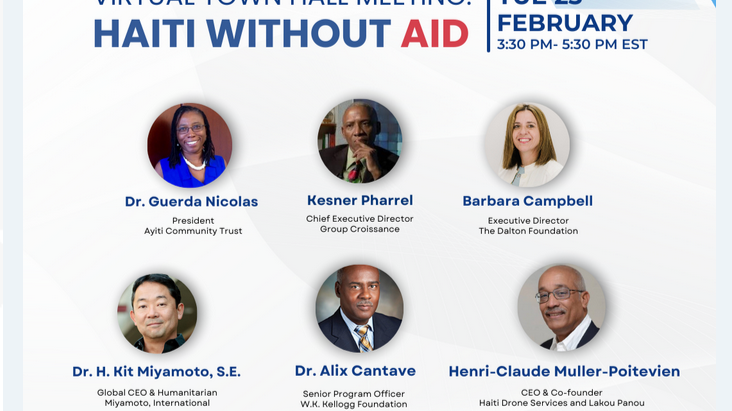
As the Trump administration works to dismantle USAID and freeze almost all funding, some argue that this presents an opportunity for Haiti to rid itself of aid and achieve self-sufficiency. But is such a transition truly feasible? What would the consequences be for Haiti’s stability and security? My friends at Haiti Renewal Alliance are hosting a webinar titled Haiti Without AID on February 25th (register here). It will be a conversation aimed at providing people with a better understanding of foreign assistance to Haiti. I hope that the panelists will give participants, especially Haitians, the facts about foreign assistance but also provide an opportunity to discuss what would happen if (all) aid stopped completely.
What Types of Aid Keep Haiti Afloat?
Many argue that Haiti has one of the highest concentrations of NGOs per capita. While these organizations provide essential services, they often work in silos and unintentionally weaken state capacity. Some contend that public institutions remain weak because nonprofits have displaced them, leaving the government underfunded and ineffective. Conversely, one can argue that the government prefers to cede its role to nonprofits and international donors as a way to reduce its accountability toward its citizens. At the same time, remittances—though vital for many families—distort the local economy by encouraging consumption over production, which creates its own set of problems.
I argue that Haiti gets foreign aid in three main ways: international aid (from groups like USAID and the UN), from nonprofits (NGOs), and remittances, which total nearly $4 billion annually. While these resources support millions, they also come with unintended consequences. International aid is crucial for disaster relief and infrastructure but has fostered dependency and an aid ecosystem that prioritizes donor interests over local needs. NGOs provide vital services but often operate independently of government oversight, further eroding state capacity. Remittances, Haiti’s largest external income source, fund daily household needs like food, healthcare, and education but also discourage long-term investment in local production.
While different in functions, all three aid streams contribute to Haiti’s economic imbalances. The reliance on external financial support has created, what economists call a "moral hazard"—reducing incentives for systemic reform and sustainable economic development. In addition, corruption plays a significant role in hindering development and aid effectiveness, diverting resources away from their intended purposes.
Can Haiti Restructure Aid or Live Without It?
This moment demands an honest discussion about the future of aid. Should it be restructured or eliminated? The reality is that every modern economy is interdependent. The question isn’t whether Haiti should receive support but how to make it more effective and locally driven.
Eliminating aid entirely is unlikely and could have devastating effects. Abrupt reductions in funding can lead to spikes in poverty, crime, and instability rather than economic independence. While gang violence is largely confined to the West and Artibonite departments, other regions face looming hunger crises. A sudden drop in aid without a transition plan could push these areas over the edge. Is Haiti ready for this transition?
Foreign aid, particularly through USAID, serves as a geopolitical tool for the United States. While USAID is an independent agency with a mandate distinct from the State Department, its Administrator is "under the direct authority and foreign policy guidance of the Secretary of State. As a result, the agency often finds itself navigating differing policy priorities. This independence is at the heart of ongoing debates about whether USAID should be fully integrated into the State Department. Ultimately, USAID functions as a key component of U.S. soft power, representing the 'Development' pillar of the '3 Ds' of U.S. diplomacy (Defense, Diplomacy, Development). In this role, USAID advances American strategic interests while also projecting an image of "American generosity."(see correction in the footnote)
What Happens If Foreign Aid Disappears Overnight?
As an intellectual exercise, the idea of cutting off foreign aid makes perfect sense. However, one does not need to be an expert to understand that cutting aid without a structured transition leads to economic and social crises. For Haiti, economic collapse is a real threat, as many small businesses and informal sector workers rely on aid-related funding through direct employment, contracts, or remittances. A sharp decline in these funds could push thousands deeper into poverty.
Moreover, crime and instability would likely increase. We know that poverty and joblessness fuel gang recruitment and more people -especially young people- falling into poverty could accelerate gang entry and control beyond the West and Artibonite regions. At the same time, a humanitarian crisis looms, with hunger, malnutrition, and preventable diseases set to rise.
How Can Haiti Break Free from the Aid Trap?
The Haiti Renewal Alliance’s upcoming webinar presents an opportunity for Haitians and development actors to engage in an informed discussion about the role of aid. This conversation must move beyond a binary debate of dependency versus self-sufficiency and consider all forms of aid while acknowledging a harsh reality: without a well-planned transition, the risks of deeper instability, suffering, and collapse are too great to ignore. This does not mean change should not happen, but Haitians must confront these challenges head-on.
The current foreign aid model provides short-term relief but has entrenched dependency. To break this cycle, Haiti must prioritize building strong institutions, diversifying its economy, and strengthening governance. My hope is that the Haiti Without AID webinar will be a platform to explore alternatives and discuss how Haiti can move toward a sustainable, self-reliant future.
The real challenge is not whether Haiti should receive foreign aid but how to reshape it in a way that fosters long-term economic resilience rather than perpetual reliance on external support. I believe a transition is necessary, but if mishandled, Haiti risks a deeper crisis instead of progress. Now is the time for serious, fact-based discussions on what an effective aid transition should look like.
Footnote. Correction: An earlier version of this article incorrectly stated that USAID operated within the State Department. It does not, though President Trump has moved it directly into the portfolio of Secretary of State Rubio as the agency's acting administrator. USAID was created as an independent agency with a mandate distinct from the State Department. The article has been updated to reflect this clarification.