

Haiti’s Aid Paradox: Managing the Fallout of USAID’s Exit
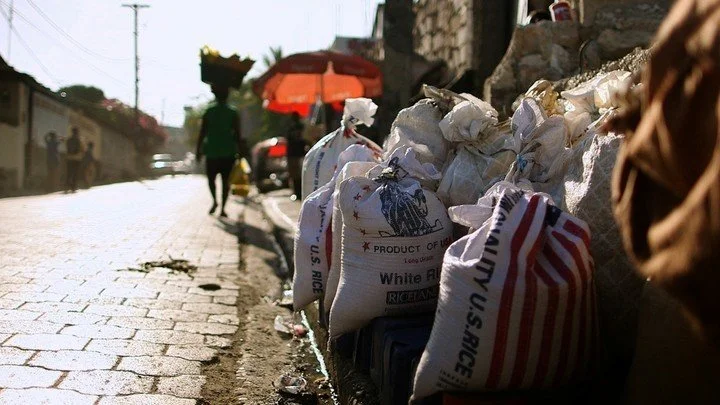
I have always believed that only Haitians can save Haiti. This conviction stems not from blind patriotism but from the belief that real change must come from within. However, this does not mean Haiti must do it alone.
The Trump administration’s “America First” policy has made the question of foreign aid irrelevant—USAID is gone. The so-called Department of Government Efficiency (DOGE) has canceled all awards, including the $416 million previously committed to Haiti. Whether or not we agree with the decision no longer matters. The reality is that U.S. financial support is no longer coming. Now, the challenge is whether Haitians can backstop this loss and minimize the impact on the country’s most vulnerable. I would hope we could, but I have not seen any evidence either historically or now that we can meet this moment.
A Nation on the Brink
In the first six months of this year alone, more than 2,500 people were killed, and nearly 700,000 have been displaced, forced into makeshift camps with little protection. Over 3,000 schools closed due to insecurity and the armed groups have destroyed 47 more in Port-au-Prince last month alone, adding to the 284 already lost this year. The United Nations Human Rights Office reports that at least 5,601 people were killed by gang violence last year alone—an increase of over 1,000 from 2023—while 2,212 were injured and 1,494 kidnapped. Experts estimate that up to half of Haiti’s gang members are minors.
The abrupt elimination of USAID programs has left thousands at immediate risk. The American Foundation for AIDS Research (amfAR) report warns that over 150,000 Haitians living with HIV now face disruptions in life-saving treatment. The World Food Programme (WFP) estimates that 4.9 million Haitians—nearly half the population—face acute food insecurity, with hundreds of thousands, especially children, dependent on international nutrition programs to survive. This is the reality Haiti faces as U.S. aid disappears overnight.
The debate over whether Haiti should rely on foreign aid is over. The U.S. has made its decision. The only question now is how Haiti will absorb the impact.
Many argue that this crisis will force Haiti to become self-reliant
Many argue that this crisis will force Haiti to become self-reliant—that without aid, the country will finally "pull itself up by its bootstraps." While this sentiment resonates with Haiti's proud history of independence, policymakers must confront the actual impact rather than rely on emotional appeals to sovereignty.
When we move beyond rhetoric to data-driven analysis, we face some uncomfortable truths. The abrupt stop in support for healthcare infrastructure, food assistance, and security affects real lives immediately—not abstract concepts. Children cannot wait for idealistic economic reforms to bear fruit - not while the gangs are actively recruiting them.
History provides cautionary tales. When international donors cut off Zimbabwe in the early 2000s, the result was catastrophic—economic collapse, crumbling healthcare, and severe food insecurity. The abrupt removal of aid deepened national turmoil rather than fostering self-sufficiency.
Haiti's healthcare system relies heavily on external funding through programs like USAID Global Health Supply Chain. Without this support, access to antiretrovirals, infant HIV tests, and critical medicines will disappear, putting thousands of lives at risk and potentially allowing once-eradicated diseases to resurface. The impact is similarly disastrous for WFP.
Security and Transparency: The Twin Crises
Haiti's most pressing crisis today is the unchecked power of armed gangs, which have effectively carved the country into three territories. Yet, the real underlying issue remains the lack of transparency and entrenched corruption that prevents bold action.
Since 2011, Haiti has levied tariffs on remittances ($1.50 per transfer) and international calls ($0.05 per minute) to fund education through the National Fund for Education (FNE). The last official report from the Bank of the Republic of Haiti (BRH) in 2018 confirmed the collection of over $120 million during the first seven years of the program. If collection continued at the same rate over the past eight years, the government would have amassed at least another $120 million, bringing the total to approximately $250 million since the program's inception..
Despite these funds, the education system is in decline, and insecurity remains the most immediate threat for Haiti's children. With fewer than 9,000 police officers, Haiti’s law enforcement is vastly outmatched by an estimated 200 armed gangs. Haiti already possesses financial resources that could be directed toward securing the country. Faced with this existential crisis, the government could reallocate some or all of these existing tariff revenues to bolster security forces. Furthermore, the same collection mechanism could be expanded to enable Haitians abroad to make voluntary donations specifically earmarked for anti-gang efforts. Yet political and economic leaders remain unwilling to make these critical decisions despite having both the means and mechanisms readily available. Instead, they treat the FNE funds as their piggy bank, operating with total opacity and no accountability for how these millions are spent.
Strategic International Support: Learning from East Asia
While Haiti must reclaim its sovereignty, the abrupt loss of more than $400 million in annual aid represents a catastrophic disruption to essential services that risks deepening an already grave humanitarian crisis.
In this critical juncture, the question isn't whether Haiti should depend on aid, but how it will manage this transition when 80% of its skilled workforce resides abroad, half the population faces food insecurity, and healthcare infrastructure is collapsing. Those who see this moment as an opportunity for Haiti's self-reliance must offer more than empty promises—they must present concrete, actionable plans to fill the enormous funding gap and address the immediate humanitarian needs before more lives are lost. They must also confront the stark possibilities of what could happen if the situation deteriorates further: increased migration, greater regional instability, and a humanitarian catastrophe that would ultimately demand even more international intervention at a higher cost, both financially and in human suffering.
I believe there is another way forward. We need a fundamentally different approach to foreign aid. Looking to East Asia offers a viable model: South Korea and Taiwan leveraged foreign assistance strategically through targeted infrastructure development, technical education programs that built local capacity, focused industrial policies in sectors where they could compete globally, and conditional support with clear benchmarks for self-sufficiency. These nations didn't reject international partnerships—they transformed them into catalysts for self-sustaining growth, designing aid with its own obsolescence as the goal. Haiti now faces a choice: take control of this transition with a strategic plan modeled on these successful approaches or let the situation spiral into deeper chaos.
However, the success of any reform hinges on addressing Haiti's deep and endemic corruption. In 2023, Haiti scored 17 out of 100 on Transparency International's Corruption Perceptions Index, ranking 172nd out of 180 countries. While many continue to propose diaspora investments as a solution, they ignore the fact that most remittance senders are working people with limited discretionary income. Moreover, Haiti's pervasive corruption ensures that very few legitimate investors would risk capital in Haiti when investments can disappear without any legal recourse or protection.
True Sovereignty Requires Strength, Not Isolation
At this moment, thousands of Haitians face violence and displacement in a nation carved into separate territories by armed gangs. Pride alone cannot stop bullets, feed the hungry, or treat HIV patients whose medications are disappearing. At this critical juncture, Haiti requires both strategic international partnerships and unprecedented domestic accountability.
Haiti's corruption ranking—172nd out of 180 countries—reflects a painful reality that must be confronted. The more than $250 million collected through the National Fund for Education (FNE) demonstrates that resources exist, but transparency does not. Without addressing its fundamental governance crisis, even the most ambitious reforms will falter.
True sovereignty isn't isolation; it's having the capacity to engage with others as equals, from strength rather than desperation. Haiti has the potential to stand among nations as a self-determining country with unique cultural heritage and economic value. But this requires honesty about our current realities and learning from successful models elsewhere.
I firmly believe only Haitians can save Haiti—but in our interconnected world, we need not do it entirely alone. The East Asian development model shows how nations can leverage international partnerships strategically, with aid designed for its own obsolescence. The question isn't whether Haiti needs these partnerships, but how to transform them into catalysts for genuine independence rather than perpetual dependence.
The time for ideological debates is over. With 4.9 million Haitians facing acute food insecurity and thousands of children at risk, Haiti must choose: take control of this transition with accountability and strategic vision, or watch as the crisis spirals further into chaos. Haiti's survival depends on action now.