

A Question for the Haitian Republican in the Age of MAGA
A few weeks ago, I received an open invitation to a dinner hosted by the Haitian American Republican Caucus, whose mission is to “advance conservative principles by empowering Haitian Americans to lead, vote, and shape America’s future.
The invitation was obviously sent in error, but I paused when I saw it and thought about the people who would be in that room. They are people who say they love Haiti, whose parents came to this country with little and built stable lives through sacrifice and hard work. Despite our political differences, I have always believed that Haitians on both sides of the aisle could be the allies Haiti needs, that we could advocate together for our country regardless of party.
More recently, I came across the pictures and videos from that evening, including images of people I know personally. They were dressed in their finest, smiling and raising glasses to the Republican Party. As I looked at those images, what filled my mind was not a sense of brotherhood, but consternation, sadness, and, I will admit, anger.
I felt angry because I could not separate those images from what is happening in our communities and to a broad swath of immigrants like us.
In my mind’s eye, I saw people who look like me – like us – being stopped on the streets and asked to show their papers. I saw children used as leverage, agents breaking down doors without judicial warrants, and pulling people from their showers. I saw men and women with no criminal record being pursued in ways that are reminiscent of the slave-catching era, and once captured, they are sent to places like CECOT, the Terrorism Confinement Center in El Salvador, a maximum-security prison built for the most dangerous criminals on the continent, now used to hold immigrants transferred under an 18th century wartime law written for enemy combatants. I thought of Renée Nicole Good and Alex Pretti, two American citizens shot and killed by federal agents in Minneapolis for standing with their neighbors. And all of this is unfolding with the acquiescence of a political party that has bent the knee to a president and advisors who have made immigration crackdowns central to their governing agenda, rooted in the fear of white replacement.
This is the party these Haitians were celebrating.
That leaves me with only one question: how can these Haitian immigrants raise a glass to a party and an administration that, right now, are targeting our community in particular and immigrants of color in general?
This Is Not the Lincoln or Reagan Republican Party
To identify as a Republican in 2025 is, in practice, to align with MAGA. That alignment now demands adherence to a set of claims, including the assertion that the 2020 election was stolen, despite every court and independent investigation finding no evidence to support it. It includes treating the press, the courts, and career public servants as enemies whenever their findings contradict the president.
More troubling, it includes a strain of white Christian nationalism that frames the United States as belonging primarily to a shrinking cultural majority. At the center of that worldview is the belief that immigration and multiculturalism are deliberate efforts to displace “real” Americans – the replacement theory. It divides the country into those who legitimately belong and those cast as a demographic threat.
For Black Americans and Black immigrants, this is not a theoretical debate. It shapes enforcement and who is treated as a contributor and who is marked for removal.
Faced with this contradiction, many Black and Haitian Republicans point to the party’s role in ending slavery, which is true. Presidents Lincoln and Ulysses S. Grant, along with the Radical Republicans, secured the 13th, 14th, and 15th Amendments, abolishing slavery, establishing birthright citizenship, and extending voting rights. Those amendments formed the constitutional foundation for civil rights law for the next century.
But history did not stop there and have come full circle in 2025.
In 1877, Republican leaders withdrew federal troops from the South in exchange for political advantage, abandoning Black Americans to decades of voter suppression and racial terror. A century later, as Democrats embraced the Civil Rights Act, Republican strategists pursued the Southern Strategy, deliberately courting white voters resistant to integration through coded language about states’ rights and law and order.
To say that neither party has been morally consistent is to state the obvious. Both have failed Black and immigrant communities at different moments. But black voters’ alignment with the Democrats did not emerge by accident.
The same 14th Amendment that guaranteed birthright citizenship after the Civil War is now under direct attack. President Trump has sought to eliminate it by executive order, attempting to undo by fiat what was written into the Constitution in blood. He has also repeatedly claimed, without evidence, that undocumented immigrants are voting in federal elections, using that assertion to justify new restrictions that fall hardest on minority communities. These are not minor policy disputes. They are a direct assault on the Reconstruction settlement, the foundational promise that citizenship is guaranteed by law and cannot be stripped away through manufactured fear.
The assault extends beyond law. The Pentagon flagged more than 26,000 images and web pages for deletion under a directive to eliminate what the administration calls “divisive ideology,” wiping tributes to the Tuskegee Airmen, the Navajo Code Talkers, and Black Medal of Honor recipients from official military records. Arlington National Cemetery removed histories highlighting Black, Hispanic, and female veterans from its website. Senior Black military leaders have been dismissed as part of a broader realignment of who belongs at the table of national power. Meanwhile, Confederate monuments have been defended and military bases face pressure to restore the names of generals who fought to keep Black Americans enslaved.
This is not a culture war over competing opinions. It is a deliberate effort to decide whose history belongs in the American story and whose should be erased.
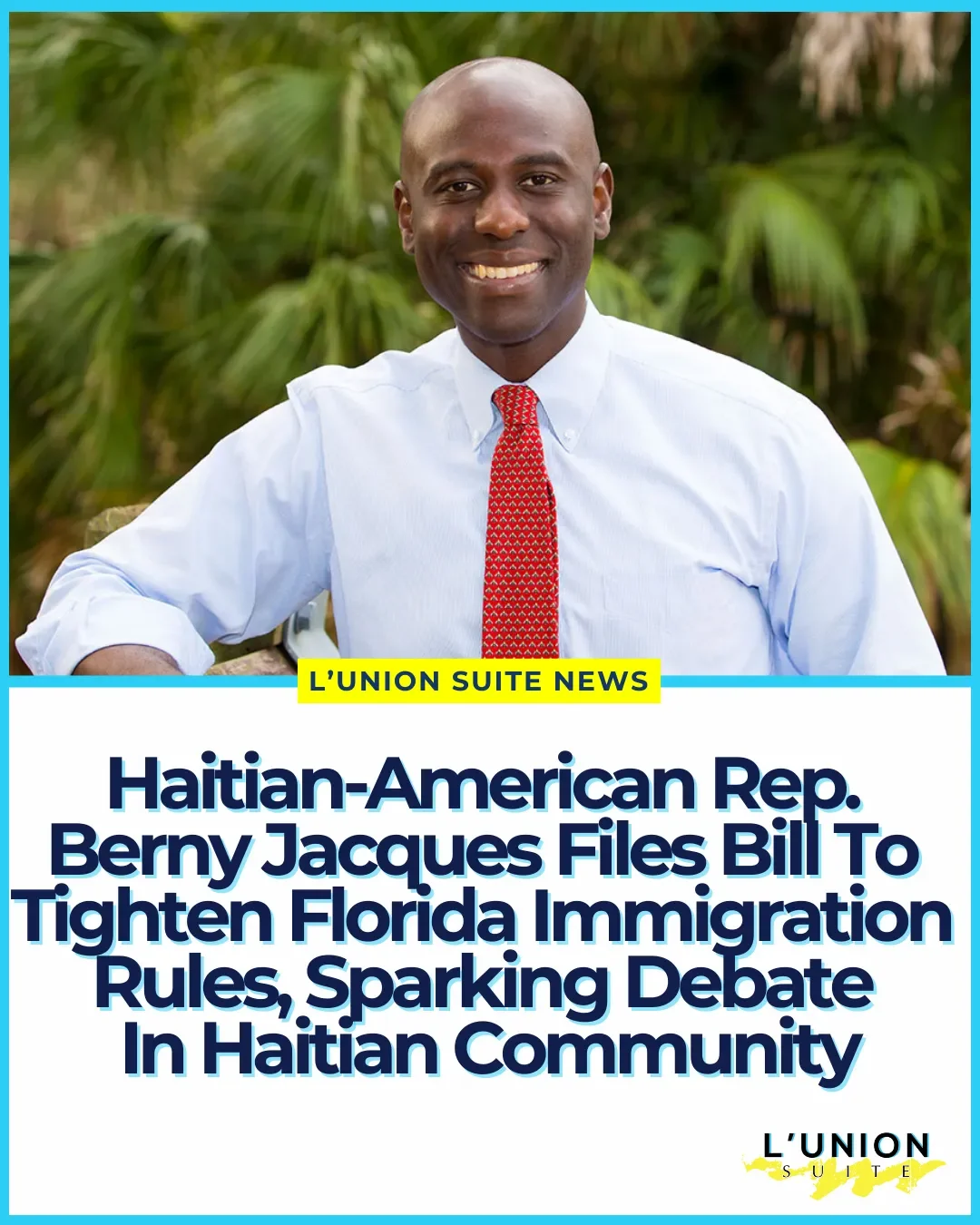
Which brings us back to where we started. When Black and Haitian Republicans align with this party in this moment, they are not simply choosing a political home. They are lending their faces and their voices to a movement that holds, in its core, two beliefs that should be irreconcilable with our identity. The first is that Black history is divisive and should be minimized. The second is that people who look like us – including Black Republicans –are replacing the rightful owners of this country and must therefore be removed to restore the proper balance. We see that logic made concrete when Representative Berny Jacques of Florida, himself the son of Haitian immigrants, offers legislation that builds on the cruelty. He did so to signal his allegiance and prove his loyalty to MAGA. That is not a fringe interpretation of the party’s direction. It is the governing logic that Stephen Miller has spent a career architecting from inside the halls of power, and it is now the organizing principle of the party whose dinner these Haitians attended in their finest clothes, raising their glasses with pride.
I Know Facts Won’t Change Everyone’s Mind, But We Know Better Than This
As Americans of Haitian descent, we have seen what happens when leaders weaken the courts, attack the press, and present themselves as the only barrier between order and collapse. We did not read about that pattern in textbooks. We lived it. Power without accountability has the same shape everywhere, and we should recognize it faster than most.
As these Haitian Republicans celebrate their party under this administration, they understand what they are enabling, but what is coming will not stop to check your party affiliation. The undocumented were targeted first because they have the least protection and the smallest political voice. But the logic of replacement was never about legal status. It is about demographics.
The logic of white replacement theory is aimed at defending against the very faces I saw smiling in those photographs from the Haitian American Republican Caucus dinner.
It is about the presence of people who look like you. And that logic has no natural stopping point. It will expand to green card holders, to naturalized citizens, to the American-born children of immigrants, to anyone whose face does not fit the nation Stephen Miller is methodically constructing. When that expansion reaches your door, no party membership card, no dinner toast, no political loyalty will change what you look like to the people you have been celebrating.
Which brings me back to the question that cannot be avoided.
How do people born from a revolt against racial exclusion find coherence within a political movement built on the fear of people who look like us?
As I studied those images, one thought would not leave me. It is of our community in that room, dressed in its finest, celebrating the architects of its own demise. The glasses are full, and the mood is festive, but we know that what comes after the celebration ends is the weight of what we have helped set in motion, and that will surely become impossible to ignore. As the Haitian proverb goes: Apre bal, tanbou lou.