

The Opportunity Before Us
In Part I, I argued that Haiti’s crisis cannot be explained solely through foreign interference. U.S. influence is real and consequential, but it becomes decisive because of our own divisions and indifference. That was the diagnosis. What follows is harder: what do we do with it?
I want to start with what is true and largely unspoken. Haiti is functioning in a constitutional void, and the people responsible for this void are Haitian. They are the members of parliament who chose faction over function. They allowed their mandates to expire rather than compromise in defense of the institution they were elected to serve. President Jovenel Moïse weakened the constitutional guardrails designed to constrain executive power, leaving little in place, and, as such, putting the final nail in the constitution’s coffin. His assassination in July 2021 meant there would not be a single elected official remaining in the country.
Into that void came the CPT, like a fire-breathing Chimera from Greek mythology — an animal composed of many parts, created as a political solution.
The CPT appointed and later dismissed Mr. Conille. In its search for a replacement, it posted a public call for applications. Dozens of individuals applied. Fils-Aimé, who had never served in government, was among them. He was interviewed and selected, though the Council never offered the Haitian public a credible explanation for his selection over the others.
In the end, Mr. Fils-Aimé proved to be a far more capable political operator than the men who brought him in. He outplayed all nine of them and remains the last one standing — though it must be said that he did not do it alone. He had the backing of at least one CPT member who turned on his colleagues and, crucially, the support of U.S. Chargé d’Affaires Henry Wooster, whom many Haitians now describe, with a mixture of irony and resignation, as Haiti’s governor.
Today, Mr. Fils-Aimé governs alone in a country that operates entirely outside its constitution — a void created not by accident but by the cumulative choices of Haiti’s own elected leaders. The opposition actors who spent years helping bury that constitution now invoke it as if it were sacred. They have no vision, no program, and no popular support. Their attempt to rally around a single article from the defunct document was rejected by the very judges whose authority they claimed to be defending.
What remains is a country without functioning institutions, where the only choices are political rather than constitutional.
History could be made in this void. But only by a leader with enough vision to recognize the moment — and enough love for this country to reach for it.
What If Mr. Fils-Aimé Were a Nationalist?
Prime Minister Fils-Aimé now stands at a rare moment in Haitian history, one that few leaders are ever given. He governs in a constitutional void. The normal constraints of the office are absent. He has the option to consolidate his power and serve the interests of Haiti’s oligarchs. Or he can attempt something far more consequential and shape how history remembers him.
What if Prime Minister Fils-Aimé were to surprise us by showing that, above all, he is a nationalist?
A nationalist is defined by where his loyalty truly lies — with the institution, not with his own survival. A leader who values his country more than his position. If Mr. Fils-Aimé were that kind of leader, he would start by doing something no recent Haitian leader has voluntarily done: accepting limits on his own power. He would create an independent oversight body composed of respected jurists, civic leaders, and technocrats, tasked with overseeing executive actions during a defined transitional period. This would not be a gesture or symbolism, but a structural commitment to accountability.
With that credibility established, security could become the organizing principle of the state. Benchmarks would be defined publicly. Progress would be tracked openly. The fight against gangs would no longer be episodic or theatrical. It would be disciplined and consistent.
Once meaningful security gains are visible, a genuine national dialogue could follow — not another elite gathering designed to redistribute positions, but a serious renegotiation of the social contract rooted in the lived reality of the majority. The outcome of that dialogue should be reflected in constitutional reform, and only then should elections be held to restore leaders with both constitutional authority and political legitimacy. All this requires trust, which is the one commodity we are short of. However, Prime Minister Fils-Aime could overcome this challenge through his actions.
Justice Without a Constitution
There is one more instrument available to a nationalist Prime Minister, and it may be the most powerful of all: justice.
Yes, while the constitution is essentially on hold, the criminal code and courts remain operational. The ULCC is active and has issued reports identifying officials involved in the misappropriation of public funds. What has been absent all along is not information, but the will to act on it.
President Xi Jinping’s anti-corruption campaign in China, launched in November 2012, is built on the simple principle that no one is untouchable. Xi pledged to target both “tigers” — senior officials — and “flies,” the lower-level officials involved in daily corruption. No rank was exempt from scrutiny. Since 2012, more than 270,000 officials have faced disciplinary action.
A Haitian government with true political will could follow this approach: arrest the well-known gang leaders, try them publicly, and enforce the law. Do the same for any public officials mentioned in ULCC reports for misusing public funds. Make the consequences clear and visible. Haiti does not require a flawless legal system; it needs evidence that the system can work — that possessing power or a weapon no longer grants immunity.
As I mentioned above, this approach depends entirely on one crucial factor: trust. Without first creating a credible, independent oversight body that offers transparency and accountability, any action by Fils-Aimé against gang leaders and corrupt officials risks being perceived as a political purge. Haitians are familiar with such tactics and can distinguish genuine efforts from manipulated ones. Therefore, the government must foster accountability in a way that the public not only expects but also trusts and believes in, transforming it from a source of fear into a foundation of confidence.
If done with integrity, this would be among the most transformative acts in modern Haitian political history. It would not require a fully functioning constitution. It would require something rarer: a leader credible enough that citizens believe accountability is about Haiti, not about him.
The Role of Haitians Andeyò
Those of us living abroad cannot remain observers.
We sustain our families through remittances. We influence policy discussions in Washington, Ottawa, Montreal, and Paris. We hold financial resources, professional expertise, and networks that could contribute meaningfully to national reconstruction. Yet we remain fragmented. Each group pursues its own visibility. Each initiative operates in isolation.
We replicate, at a distance, the very divisions we criticize at home.
We possess advantages that many inside Haiti do not. We have the organizational freedom to build structures without fear of immediate retaliation. We have distance from daily insecurity, even if that distance is incomplete, as many of us still bear the cost when a relative is kidnapped. We have resources that, if pooled and governed with discipline, could strengthen institutions rather than personalities.
None of these advantages disappear simply because we have failed to use them well.
The freedom we enjoy abroad carries responsibility. If we remain divided, we will continue to be treated as a constituency to be courted episodically rather than as a collective force capable of shaping outcomes. But if we discipline ourselves, if we align resources and strategy, we can reinforce the very institutional coherence we are asking the state to build.
The question is not whether we care. It is whether we are willing to coordinate.
The Work Ahead
I am not naïve about the obstacles before us. I am not even particularly hopeful in the conventional sense. But I remain convinced that ideas matter because they shape conduct. Discipline matters because it transforms intention into structure. Nations are rebuilt not by rhetoric, but by men and women who refuse to surrender responsibility when it is easier to deflect it.
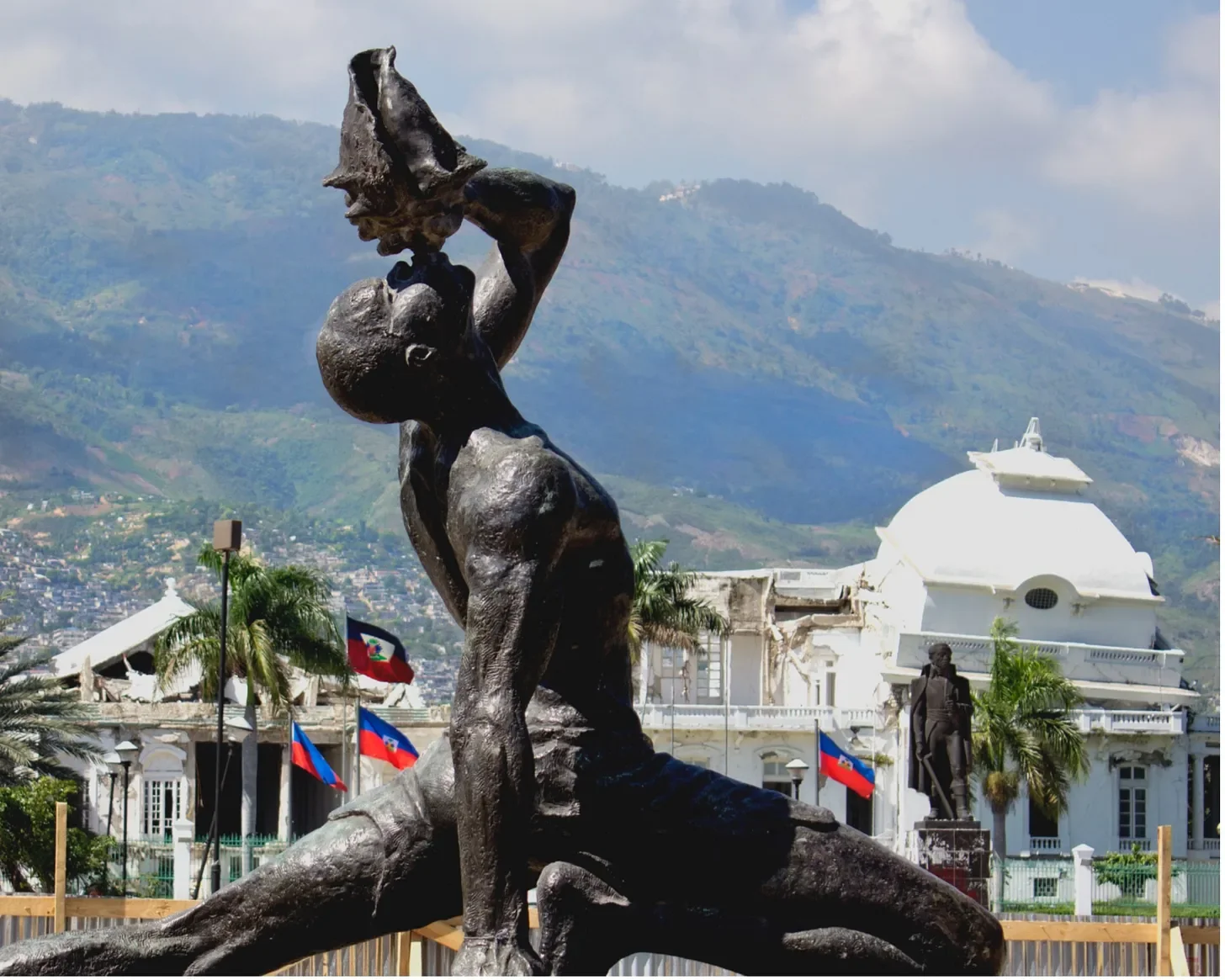
The Maroons did not wait for favorable conditions. They did not demand guarantees before acting. They built autonomy in hostile terrain, with incomplete tools, against a superior force. They organized their own governance and defended with their lives what they had created. Their freedom was not granted. It was built, protected, and sustained through discipline.
Finding our inner Maroon in this moment does not mean romanticizing resistance. It means building internal coherence strong enough that external pressure cannot determine our fate. It means rejecting the comfort of a single story that assigns blame outward while avoiding responsibility inwardly. It means acknowledging that we live beside a superpower while refusing to behave as if we are powerless.
We are not waiting for history to rescue us. It is ours to shape.