

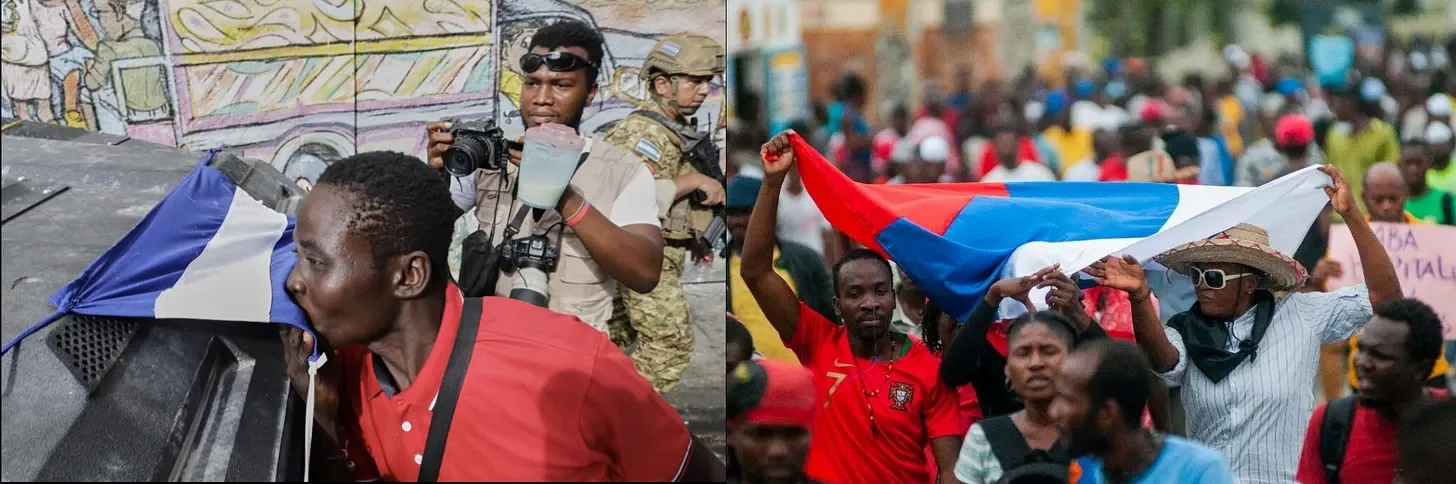
In 2019, Haitian protesters burned American flags and chanted “Long live Putin.” In 2022, they waved Russian flags. This month, crowds cheered Salvadoran soldiers and chanted Nayib Bukele’s name.
The shift says less about ideology than about a people so exhausted by violence that they will embrace anyone who promises relief.
Meanwhile, Ayiti’s prime minister thanked Bukele for his “commitment to the national fight against gangs” while meekly insisting that Haiti directs the operations, even though most Salvadoran troops operate outside the UN-authorized force. I doubt anyone believed him, including the prime minister himself.
We should be ashamed not of our people’s desperation but of a Haitian leadership that has given them so little reason to place their hopes in one of our own.
I understand why Bukele’s intervention may seem like the salvation Haitians have long waited for, and I welcome any relief it brings. Desperation, however, should not keep us from asking what comes next. Indeed, patriotism requires the courage to ask difficult questions, especially when easy answers appeal to so many.
History offers two lessons worth remembering.
The first is that power corrupts, whether under the Duvaliers in Ayiti, El Salvador’s military dictatorships, or in Russia and the United States today, whose leaders have weakened institutions and placed themselves above the law.
We know that when democracy erodes, repression follows and freedoms disappear.
The second point is that no foreign power can build a nation whose people refuse responsibility for its own future. The United States spent an estimated $8 trillion on its post-9/11 wars, which left at least 4.5 million dead across these war zones. Yet the Taliban returned to power, and Iraq remains unstable. After twenty-five years of UN peacekeeping in Congo, the country remains at war, and children still risk their lives mining the minerals in our electronics. In Syria, it was local opposition forces that toppled Assad in 2024.
We, Haitians, should understand this better than anyone, because in 1804 we won our freedom ourselves, despite the overwhelming forces aligned against our ancestors.
The Foreign-Savior Trap
In a few short weeks, the Bukele fever has spread across Ayiti and among Haitians abroad. Still, we must not let the fever turn into delirium, and we must think clearly about what his intervention could mean for our future.
With a clear head, we can see three possible scenarios.
In the first, Bukele believes he is carrying out, as he said, “a mission from God” and commits to fighting his holy war to the end. If so, we need not guess how he intends to win. In El Salvador, his strategy has relied on a state of exception renewed more than fifty times, suspending constitutional protections and enabling mass arrests and prolonged detention without due process. Applying that model in Ayiti would require control over our political and security institutions, either directly or through Haitian proxies. We know where that road leads, having lived it for twenty-nine years under the Duvaliers. The question is whether we are prepared to surrender our sovereignty and fundamental rights for the promise of security.
In the second, Bukele expands the military campaign, “defeats the gangs,” declares victory, and leaves, as he has also promised. We have seen this movie before. In 2006 and 2007, Brazilian-led MINUSTAH forces broke the gangs’ hold on Cité Soleil at a terrible cost to civilians. Ayiti enjoyed years of relative calm, but successive governments failed to build on those gains. Nearly twenty years later, the gangs are stronger and more entrenched. The political and economic actors who financed those gangs are even more sophisticated. They are linked to criminal networks that traffic in weapons, drugs, and people, and those networks could easily outlast a military campaign. Meanwhile, some neighborhood self-defense brigades have begun collecting tolls and asserting territorial control. Removing one group of armed men does not prevent another from taking its place, especially where generations of exclusion have robbed young people of hope and opportunity.
The third possibility is the one I hope for. Bukele succeeds, and Haitian leaders finally rise to the occasion. They seize the moment to dismantle criminal networks, rebuild the police and courts, and build institutions that can keep the peace after foreign soldiers leave. I would gladly be proven wrong about the first two scenarios, because the objective is not to win an argument about Bukele. It is to see Haitian families live in security.
Still, all three scenarios raise the same question. Is there Haitian leadership capable of turning a foreign military victory into lasting peace?
No One Can Save Us but Ourselves
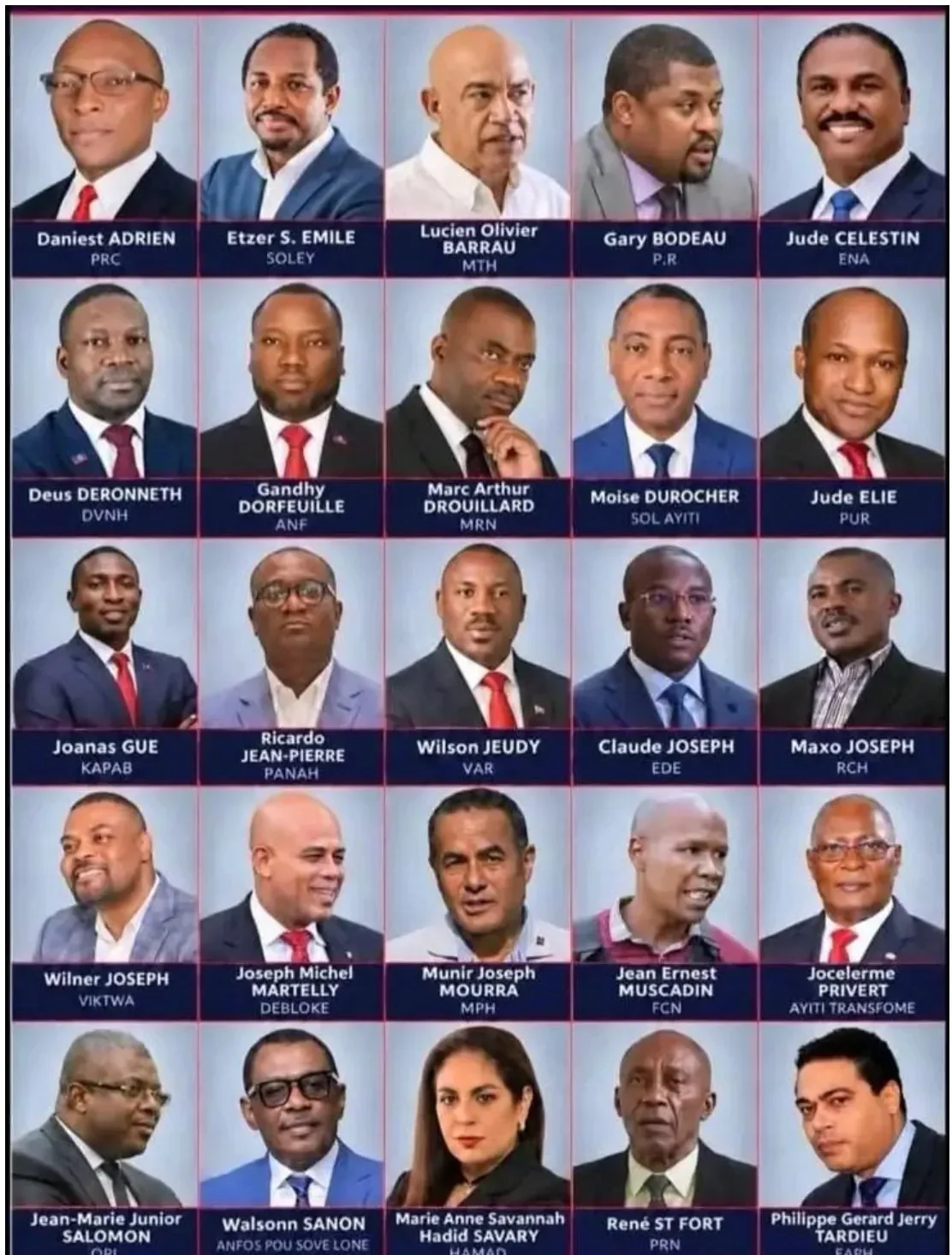
Foreign troops can help Ayiti reclaim lost territory, but only Haitian institutions can prosecute those who financed and sustained the insecurity. Yet I find little cause for hope as I watch more than two dozen people line up to run for president in elections now set for July 2027. While Salvadoran soldiers fight the gangs, Haitians are already rallying behind candidates who have failed to rise to the most challenging moment in our nation’s history. These candidates promise schools, hospitals, roads, and economic development, and they campaign as though the country were living in normal times.
Two years ago, I wrote in AyiboPost that while foreign interference played a role in Ayiti’s crisis, Haitian hands steered us here. I have also argued that no foreigner, whether Brazilian, Kenyan, or Salvadoran, is obliged to make the ultimate sacrifice for our freedom, because that responsibility belongs to us. If Haitian hands brought us here, Haitian hands must lead us out. Our dignity, and indeed our humanity, depends on demanding more from those who seek power and on organizing the collective strength of Haitians at home and abroad into a force our leaders cannot ignore.
Those who stand for nothing will fall for anything, and a political class that stands for nothing leaves its people ready to fall for anyone.
I understand the desperation behind the crowds chanting Bukele’s name, but those of us burning with the Bukele fever should not mistake legitimate questions for indifference to our people’s suffering. We cannot wrap ourselves in the Haitian flag while uncritically celebrating foreign troops as our saviors. Foreign assistance may be necessary, but necessity does not absolve us of the duty to question it. Until we produce the leadership our people demand, even a military victory will leave intact the system that produced the gangs.