

The Canary Was Always Singing
What Middle Powers Are Now Learning, Small Nations Have Always Known
When the Veil Is Lifted
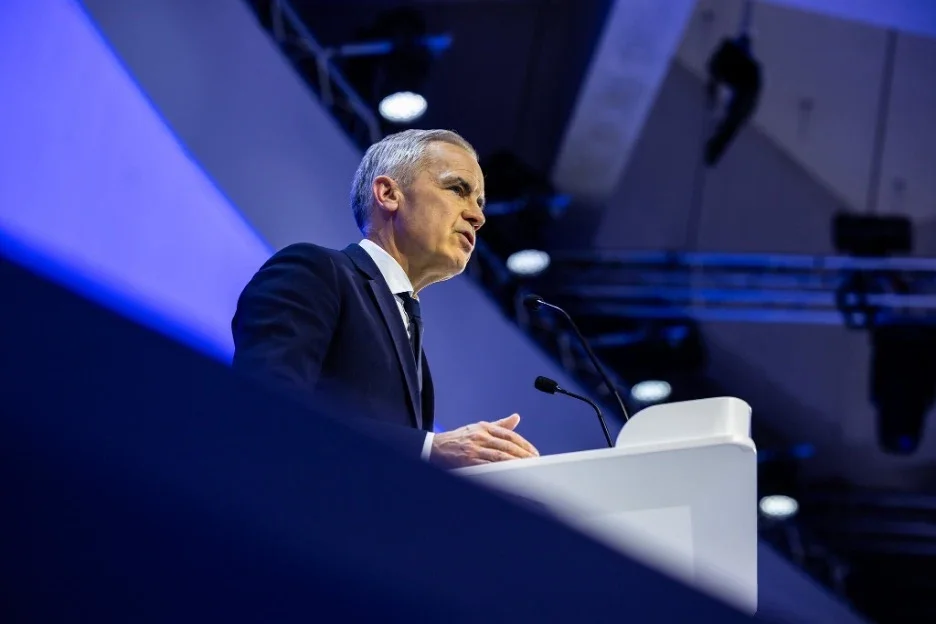
This week, Canadian Prime Minister Mark Carney stood before the World Economic Forum in Davos and did something rare for a leader of a wealthy Western nation. He told the truth.
“We knew the story of the international rules-based order was partially false,” Carney admitted. The strongest, he said, exempted themselves when convenient. Trade rules were enforced unevenly. Drawing on Václav Havel’s warning about living within a lie, Carney argued that middle powers had spent decades participating in rituals they privately knew were dishonest. “This bargain,” he concluded, “no longer works.”
The speech was eloquent and widely praised, and I welcomed it. I appreciated it for its raw honesty, delivered in the measured way of a Canadian who knows the weight of what he is saying. It was one of those rare moments when a senior Western leader spoke plainly about a system everyone understood but kept performing anyway. The emperor is naked.
The system stands exposed. There is no turning away now, no pretending we did not know.
For decades, leaders from smaller nations, often grouped under the loose, dismissive label of the Global South or developing countries, have said precisely this. They said it without the protection of strong currencies, powerful alliances, or forgiving audiences. In 1974, Jamaica’s Michael Manley mobilized newly independent nations to demand a New International Economic Order. Tanzania’s Julius Nyerere stood beside him, arguing that a system designed without the poor would always work against them. Their efforts were dismissed as unrealistic. The message was clear: the rules were already written.
Nearly fifty years later, at COP26, Barbados Prime Minister Mia Mottley made the same argument with devastating clarity. When the wealth of industrial nations was built on colonial extraction, and that industrialization produced a climate crisis, she asked, how could the burden of repair fall on those least responsible? She was applauded, praised, and largely ignored.
The Canary That Was Ignored
Haiti’s story sits at the center of this contradiction. Few people remember that Haiti was among the United Nations’ founding members. Even fewer know that in 1948, it was a Haitian, Senator Emile Saint-Lot, who presented the Universal Declaration of Human Rights to the General Assembly in Paris. A descendant of the formerly enslaved, he called it a historic effort to give humanity new moral and legal foundations.
The irony is hard to ignore. The same institution that Haiti helped build later introduced cholera through negligent peacekeepers, killing more than ten thousand people. Today, that institution watches powerlessly as the Trump administration treats it, and even its own allies, with the scorn once aimed only at nations like Haiti.
What Prime Minister Carney described as a rupture is therefore not a break from the past. It is the system behaving exactly as it always has. The rules-based order did not fail. It functioned as designed, protecting the powerful while disciplining the weak. Yet this does not negate the value of Carney’s words, nor does it diminish the need for a genuine rules-based order. On the contrary, his honesty strengthens the case for enforcement that is consistent and applied with moral credibility.
The contradiction was visible and more ironic even as Carney spoke in Davos. At that very moment, the Canadian embassy was publicly warning Haitian political leaders that it would “take measures against any actor who compromises Haiti’s peace, security and stability,” while urging members of the Transitional Presidential Council to leave office as their mandate expires. The language of rules and restraint remains flexible when applied downward. Moral clarity, it seems, still has borders.
This does not invalidate Carney’s message. In fact, it reinforces it. His speech mattered precisely because it stripped away the comforting illusion that these contradictions are accidental, temporary, or the result of poor execution. It made clear that they are structural features of the system itself, embedded in how power is distributed and exercised, and therefore impossible to ignore or explain away.
President Donald Trump did not create this reality. He merely exposed it.
A leader willing to discard norms openly was always likely to emerge from an order that allowed powerful states to bend the rules. When the current U.S. administration threatens allies with tariffs, speaks casually about acquiring Greenland, and pursues parallel tracks that bypass multilateral institutions, including the Board of Peace, it is not inventing a new disorder. It is revealing the old one.
Yet even now, some smaller nations mistake submission for safety. This month, St. Kitts and Nevis Prime Minister Terrance Drew announced his country would accept U.S. deportees but explicitly exclude Haitians.
Carney told his audience that the old order is not coming back and should not be mourned. He is right. But what middle powers are now confronting is what smaller nations have lived with for generations. We were always the canary in the coal mine. The mine itself was always poisoned.
The difference today is that the poison has risen high enough to be noticed by middle nations.
If a new global order is emerging, small nations cannot allow themselves to be divided. The powerful have leverage, markets, and force. What we have is numbers, shared memory, and the refusal to disappear quietly.
That may not be enough. But it is all we have ever had