

From Words to Action: Reimagining Haiti's Regional Power
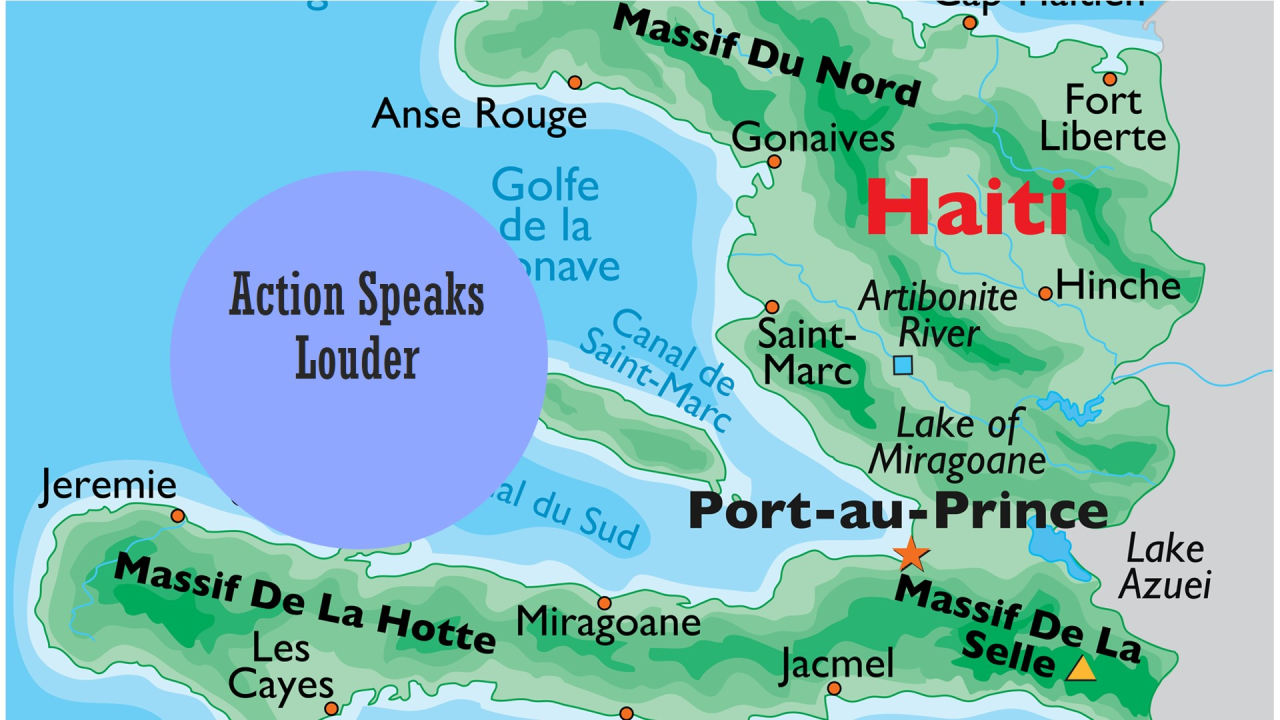
As many of us celebrate the Christmas season and welcome the New Year, Haitians are enduring massacres by gangs, extreme levels of hunger, and devastating floods in Cap-Haïtien and Port-de-Paix. Amid these crises, we hear again the familiar refrain: "Port-au-Prince is not Haiti." Ask any Haitian about the country's troubles, and you'll likely hear some well-worn complaints: the international community controls everything from behind the scenes, the Republic of NGOs—all 10,000 of them—profits from our suffering, and inevitably, someone will invoke "the Clintons." While these grievances reflect real historical wounds, they have become convenient excuses for inaction.
In my previous article about Haiti's sovereignty, I challenged our tendency to blame external powers while simultaneously seeking their aid. Today, I confront a similar paradox in our domestic politics: regional leaders who denounce Port-au-Prince's dominance while failing to exercise their existing authority to govern. It's easier to blame foreign interference, NGOs, the Clintons, and the capital than to take responsibility for regional governance. Yet the law provides regional leaders with significant power, and the current dysfunction in central leadership offers even more opportunity for local autonomy.
The Government Commissioner's Muscadin in the Nippes department demonstrates what's possible when a regional leader act decisively. Conversely, Cap-Haïtien, which has become Haiti’s nerve center shows us the cost of hiding behind excuses.
The mutual neglect between central and regional authorities persists because it serves everyone's interests to look the other way—the center can blame regional incompetence, while regional leaders can blame Port-au-Prince's neglect. Meanwhile, Haitians continue to suffer.
The Central Government's Collapse and Regional Opportunity
Haiti's central government has not just failed—it has collapsed. There are no elected officials in office, and the Presidential Transitional Council (CPT) has proven to be not just ineffectual but also deeply corrupt. Recent events, like the ostentatious Christmas party at Villa d'Accueil amid a national crisis, reveal a leadership disconnected from the people's suffering.
This collapse creates an opportunity for regional governance to emerge as a viable solution. Those who argue that too much of the country's meager resources are concentrated in Port-au-Prince have an open door to show what can be accomplished through decentralized leadership. If the "Republic of Port-au-Prince" is truly separate in their eyes, then nothing stops regional actors from taking bold steps to serve their communities.
The success of Commissaire du Gouvernement Muscadin—a position analogous to a state attorney general—shows how regional leaders can bypass central government ineffectiveness and effectively protect their communities. Faced with the central government's inability to provide security, Muscadin has collaborated with local communities, some police officers, and the diaspora to prevent gang infiltration in his department. He has even come to the aid of nearby cities like Léogâne and Les Cayes, which are outside his jurisdiction. His achievements challenge two persistent myths: that Haitians lack the capacity to defend themselves and that external powers prevent Haitians from securing the means for self-defense.
How Muscadin secures the weapons and ammunition to arm his forces remains unclear, but his results speak for themselves. With determination, resourcefulness, and grassroots support, regional leaders can fill the void left by an absent central authority. Muscadin’s work demonstrates that existing laws can be liberally interpreted to serve local needs. If more regional leaders embraced such an approach, they could transform their communities.
Cap-Haïtien: A City of Untapped Potential
Cap-Haïtien stands as a stark example of regional leadership's failure to seize obvious opportunities. The city possesses remarkable advantages: Haiti’s only functioning international airport, an active port, tremendous tourism potential, and increasing status as a haven for those fleeing Port-au-Prince's chaos. Yet visitors to Cap-Haïtien encounter a city that betrays its potential through disorder and neglect.
Evidence of failed leadership is everywhere: mounts of garbage accumulate on streets, the city remains in the dark due to years-long delays in repairing power generators, and uncontrolled construction are creating the same “bidonvilles” that serve as gang recruitment ground for disenchanted young people. These failures cannot be blamed on foreign interference or the central government. Cap-Haïtien has a vibrant intellectual and business community, yet their influence is shamefully invisible in the city’s daily operations.
The legal framework providing authority for the municipality to act already exists. The 2006 decree signed by provisional President Boniface Alexandre grants the Municipal Assemblies broad authority through Articles 36 and 37 to plan local development, manage budgets, collect revenue, and oversee public services. Articles 157 and 158 provide mechanisms for generating local income through taxes, fees, and fines. If criminal gangs can establish functional tax systems within their territories, legitimate regional leaders can certainly do the same with community support and legal backing.
Cap-Haïtien could serve as a model for effective regional governance. Revenue generated from local taxes on port activities, airport operations, tourism, vehicles, and property could fund essential services like waste management and electricity provision, independent of Port-au-Prince's approval. A tax on goods passing through the port and airport could finance enhanced security and infrastructure improvements. Property taxes could support road repairs, waste collection, and fund the enforcement of zoning regulations to prevent chaotic development. Ironically, gangs have demonstrated a greater degree of administrative efficiency than many Haitian officials. When we see how the gangs have been able to squeeze forced taxation to fund their criminal activities, the people would likely be open to paying more to the state if they were providing security and essential services.
Instead, Cap-Haïtien's leaders seem content to replicate Port-au-Prince’s mistakes while blaming others for their inaction. The city's potential remains squandered due to a lack of visionary leadership willing to act decisively.
GoFundMe is not a Solution
While private fundraising initiatives and diaspora contributions can provide crucial short-term relief, over-reliance on these efforts can have detrimental long-term consequences. They can divert resources from public coffers and erode trust in the government, creating a power vacuum that can be exploited by corrupt actors. Citizens should not be burdened with the responsibility of providing essential services that are the rightful duty of the state.
The KPK movement, while demonstrating the incredible resilience and resourcefulness of Haitian communities, also highlights the tragic reality that citizens are forced to fill the void left by an absent or dysfunctional government. While inspiring, such efforts are often unsustainable and cannot address the root causes of the problems facing Haiti.
The recent floods in Cap-Haïtien and Port-de-Paix further illustrate the limitations of such private efforts. These disasters have overwhelmed these local communities and highlight the urgent need for systemic solutions rooted in regional governance. This requires a fundamental shift, including increased revenue generation through fair and equitable taxation, decentralization of power to empower local governments, and a commitment to government transparency and accountability.
No More Excuses: Regional Power Awaits
The primary obstacle to regional self-governance isn't legal constraints or resource limitations—it's the reluctance of regional leaders to act. Many who proclaim "Port-au-Prince is not Haiti" limit their resistance to radio commentary and social media criticism. This passive approach is inadequate when the means for genuine self-governance already exist.
Haiti stands at a decisive moment. The success of leaders like Muscadin proves that regional governance can work within our existing framework. Saying "Port-au-Prince is not Haiti" might feel satisfying, but until regional leaders take concrete action, they merely perpetuate the capital's dominance. Regional leaders must now match their rhetoric with concrete action by establishing transparent tax systems, creating security frameworks, developing climate resilience plans, and building sustainable public services. The transformation of one region can inspire others, creating a cascade of positive change that strengthens our entire nation.
We cannot avoid the reality of the world we live in, but we can take decisive action where we are. Regional leaders already have the tools and opportunities they need. It's time to use them.