

USAID's Dismantling Is Complete. Now Its Critics Must Fill the Gap
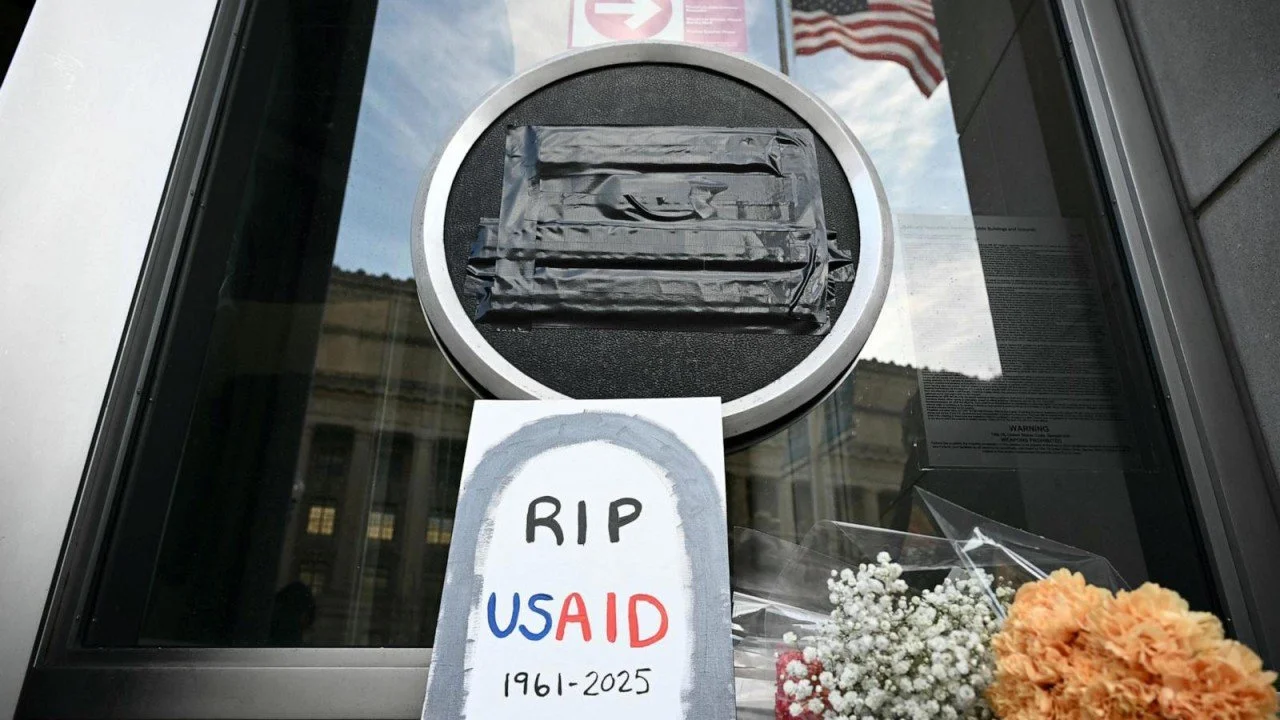
The Trump administration has taken the final step in its campaign to gut the United States Agency for International Development. As CNN reported, the “State Department formally notifies Congress it is effectively dissolving USAID” Secretary of State Marco Rubio announced that the agency's independent functions will be folded into the Department of State, bringing it under direct executive control.
Although legal challenges are still underway, in practice, USAID no longer exists. And now, the burden of leadership falls squarely on the Haitian voices—activists, intellectuals, and diaspora leaders—who for years insisted it was the greatest obstacle to Haiti's sovereignty. The institution they claimed held Haiti back has been dealt a death blow. The excuse is gone. The question is: Now what?
Let’s be honest: the demise of USAID wasn’t reform—it was dismantlement. It reflects a broader ideological assault on institutions that provide basic protections like health, education, and security—for vulnerable populations abroad, and increasingly, for communities here in the United States. The administration’s unilateral decision to eliminate USAID signals a deeper disregard for the rule of law, with implications that extend far beyond one agency. As this approach spreads to other departments, it threatens to reshape U.S. governance in ways that will impact lives both at home and around the world.
The First Domino: USAID's Fall Signals Democracy's Retreat
History teaches us this: once the rights of the most marginalized are taken, the rest soon follow. The strategy is familiar. First, target institutions the average American doesn’t fully understand—like USAID. Then, vilify groups deemed responsible for our "problems." Once those narratives take hold, it becomes harder to resist deeper, more sweeping cuts.
What began with foreign aid is now hitting core domestic agencies. The Department of Education has announced plans to “lay off more than 1,300 employees,” and the President has signed an executive order to dismantle the department entirely. At the Department of Veterans Affairs (VA), 83,000 jobs have been cut. The Social Security Administration (SSA) is targeting a reduction to 50,000 employees—down from approximately 57,000. The Department of Health and Human Services (HHS) is expected to “lay off 10,000 workers and shut down entire sub-agencies.”
These are not minor trims—they are structural attacks on the very idea of public service.
This unraveling isn’t just about public services but fundamental democratic values. Sometimes, you have to be careful what you ask for—because you just might get it. Despite the rightful critics of American exceptionalism and hypocrisy, what we do here has ripple effects beyond our borders. As we retreat from democratic norms, around the world, democracy is in retreat. Right-wing populist movements are gaining momentum—from Modi’s India to Le Pen in France, Orban in Hungary, and Presidents Milei in Argentina and Bukele in El Salvador. Though varied in context, these leaders share a common playbook: nationalism, fear, authoritarianism, and the erosion of democratic norms.
USAID wasn’t perfect. It was political, bureaucratic, and at times funded organizations whose missions clashed with cultural values in countries like Haiti. To be fair, some of those so-called cultural values deserve scrutiny—and in many cases, should be challenged or even discarded. But to ignore the good USAID accomplished—the clinics, schools, food aid, rural hospitals, and disaster recovery efforts—is not just dishonest. It’s bad accounting. Yes, some programs served U.S. strategic interests. And even if I were to agree with some critics who argue that up to 80% of its funding remained with U.S.-based contractors, the fact remains: USAID built real infrastructure and delivered essential services in places where Haitian institutions consistently failed.
For years, prominent Haitian critics portrayed USAID as the central obstacle to national sovereignty. They claimed it propped up unaccountable NGOs, distorted local governance, and entrenched dependency. Now is the time for Haitian leaders in Haiti and abroad to implement community-funded education programs, diaspora-led investment coalitions, transitional health strategies, and a long-term development agenda. If USAID's presence blocked Haiti's sovereignty, then its absence should unleash it. Those who advocated for this moment must now meet history.
I Still Believe in Haitian Agency
We cannot treat this as an intellectual exercise—this is life and death. In my article “Have We No Agency,” I argued that it is overly simplistic “to attribute the complex and difficult challenges Haiti is facing solely to the international community (IC) and international non-governmental organizations (INGOs).”
Today, across Haiti, hospitals are closing, clinics are disappearing, and essential medicines are running out. Teachers aren’t being paid, and students are out of classrooms. The collapse of global aid—without a functioning local safety net—will set Haiti back by decades.
To treat this moment as a victory without a plan is not just irresponsible—it's immoral.
I'm angry. Angry at the administration for its cruelty. But even angrier at ourselves—for our inability to unite, even now, during a crisis that threatens to erase us. Kiskeya will not "just sink into the Caribbean." But Haitians—our people, our dignity, our culture—can be erased from the island.
I've written before—and still believe—that despite debts that countries like France and the U.S. owe to Haiti, the responsibility for its development is Haitian. We have sold our sovereignty in backroom deals with foreign powers. We've outsourced our institutions to NGOs, including diaspora-led ones. And in shameful cases, we've commodified Haitian bodies through exploitative labor, migration deals, and even organ trafficking.
These are our failures. They belong to us.
The Excuse Is Gone. It's Time to Lead.
USAID is gone but its absence doesn't absolve us of responsibility. It deepens it.
To the activists, intellectuals, and leaders who spent years calling USAID the enemy of Haitian sovereignty—this is your moment. The foreign hand you said stood in the way has been removed. The field is open. The question now is not what USAID did or didn’t do. The question is: what will you do?
Was the critique ever truly about sovereignty? Or was it a shield to avoid the difficult, messy, and long-term work of building a nation? Because that work is here now, waiting—for all of us.
If Haiti is to rise, it will be because Haitians stepped forward, organized, and dared to lead.